


A

Michael Asgaard Andersen’s research examines how architecture and urbanism shape everyday life and welfare in ageing societies. For more than two decades he has studied housing in Nordic contexts, with a focus on social and cultural sustainability. This work has consolidated at the intersection of the built environment and gerontology.
As populations age, more and more care moves into people’s own homes. Yet much of the housing older people live in was never designed for a life with ageing. Andersen’s research addresses what the physical environment means for older people’s health, wellbeing and independence, and how the home can support a dignified everyday life, or quietly erode it.
His research spans several scales: the home, where older people spend most of their time; residential developments and public space, where accessible shared areas and meeting places can strengthen social relations across generations; and urban and rural districts, where both densification and depopulation place new demands on the design of age-friendly environments. Methodologically, he combines architectural analysis and research by design with qualitative, ethnographic and participatory studies that involve older people and communities themselves.
A recurring theme is that care is not only a service but something that emerges in the relation between people and the architecture they inhabit. For Andersen, the aim is not architecture for its own sake, but settings that make everyday life easier and more dignified for older people and people with age-related impairments.
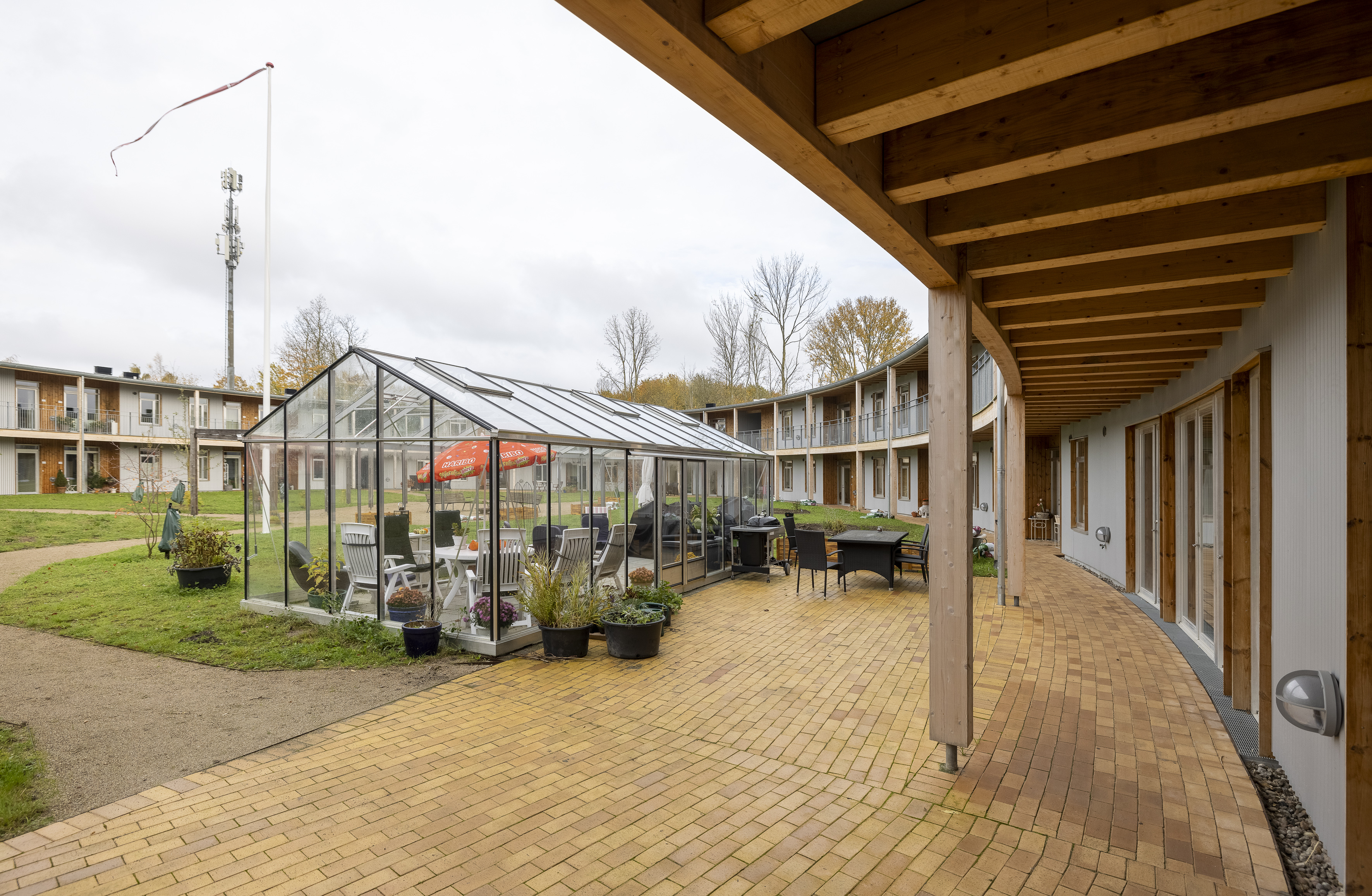
Andersen has researched various forms of cohousing, exploring how architecture can contribute to societal change. As editor of the book “Bofællesskaber – 1970 til i dag” (Cohousing – 1970 to today), he has brought renewed attention to the subject, both within research and in the wider public, showing that living in community and sharing more can be a path to a more sustainable everyday life.
His work has also shed new light on age-integrated forms of housing, from intergenerational housing to life-stage housing that supports the sense of self-worth bound up with moving about in one’s own home and immediate neighbourhood, even as physical and mental ability declines in later life.
The research is internationally anchored. Andersen takes part in Nordic and international research networks on health, ageing and the built environment, and collaborates, among others, with leading researchers in dementia-friendly environments.


