


A

Explorative soil care interventions in public space around Campus Holmen developed from medio 2025 onwards. Ad hoc workshops and projects developed for the love of soil and concern about the state of pollution and soil degradation happening in cities as well as in the countryside. On September 17 we gather on Campus for a Landscape Cluster Conversation about Urban Soil Care, where four Danish experts on various aspects of the topic are invited to converse with us about our common concerns. The week before this I take part in a panel on Soil Data at the European Association of Science and Technology Studies Conference 2026, to discuss the paper 'Love and Toxicity in Urban Soil Care Architectures' with international colleagues.
Caring with and for soil, and being cared for by soil in return, is the basis of my current practice. There are, however, many challenges when attempting to extend a personal and affective collaborative soil making practice into the urban space. The awkwardness by which we try to make home in cities today, become apparent as soon as you start working together with soil communities and try to engage in collaboration on their terms. Developing relations with soil deeply challenge hierarchies of organization and household ecosystems of today, encouraging us to slow down and use our senses in different ways.
Research article submitted with preliminary results. In review.


On awkwardness and hosting: One year fieldwork project from 2025 and the beginning of 2026, piloted collective movement workshops, in order to focus on the particular needs of teenage girls in designed urban public spaces. This group of citizens has often been overlooked in the planning of neighbourhoods, with particular groups of boys often dominating sports fields, forgetting other genders and young people preferring more quiet and differentiated activities in smaller groups. The results were presented at a seminar organized in collaboration with the Danish Architectural Association in April 2026, and a research article is in the process of review.
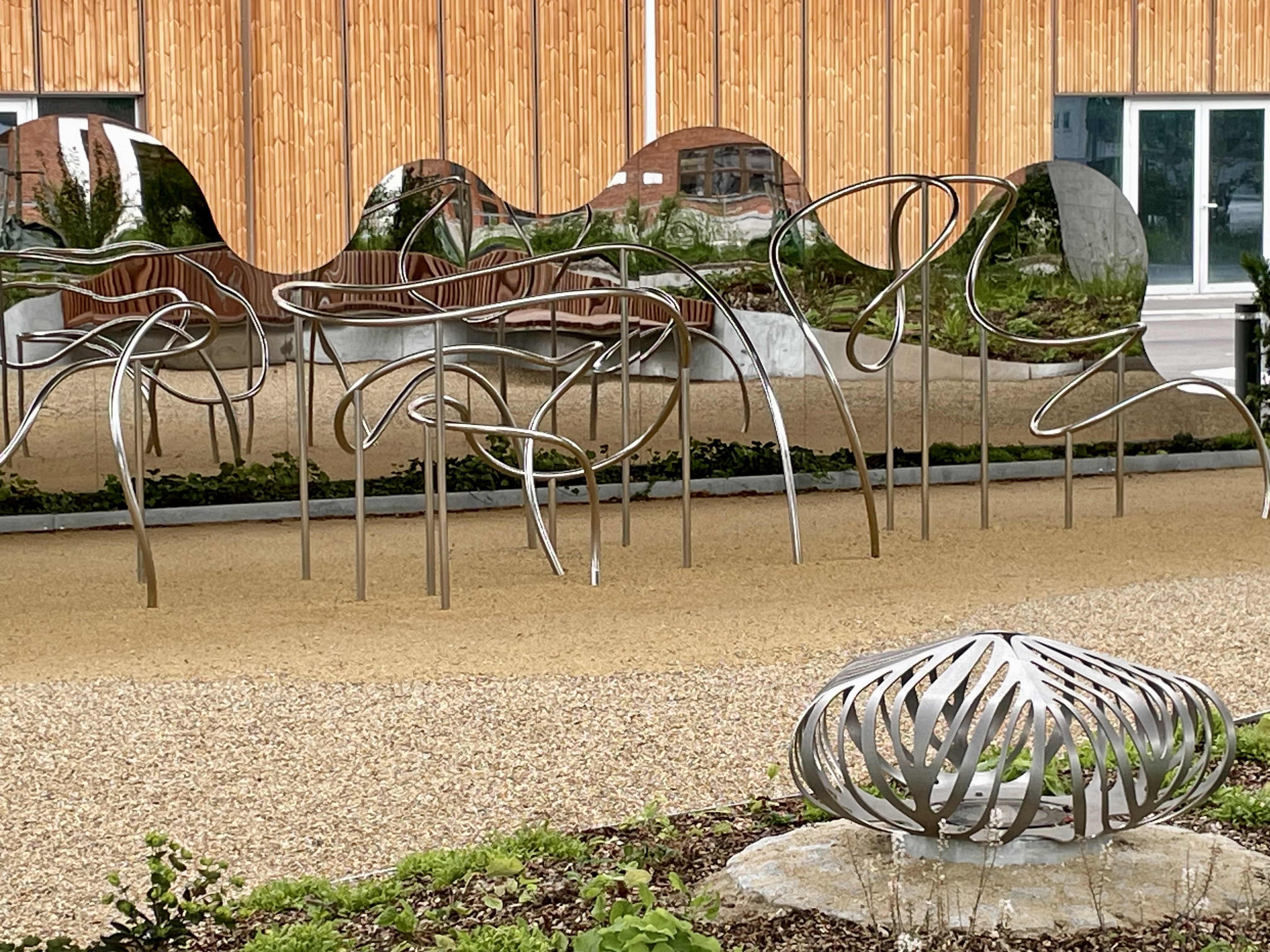
Current post doc project starting medio 2026 is in collaboration with Copenhagen Municipality, focusing on human diversity and more-than-human relations in a number of climate adaptation urban square designs. The project is part of the institution-wide Bevica partnership focusing on universal design, shared vulnerabilities and mutual interdependencies across all the specialisations of the Academy.
How are relationships between biodiversity and human diversity articulated among different groups of users? What relationships between biodiversity and human diversity are important for urban public space design and for finding home with more-than-human relations in the city today? Does this vary among the different types of users?


