A

Where we live shapes how healthy we are. Across much of sub-Saharan Africa, homes, hospitals and neighbourhoods let disease in: mosquitoes enter through open eaves, rooms overheat, and smoke and damp linger indoors. Good design can change that.
As an architect trained in medicine, I bring the methods of medical research into design: randomised trials and large field studies. I work with leading international universities, including the University of Oxford, the London School of Hygiene & Tropical Medicine and Durham University, and with health researchers and communities in Africa. The goal is evidence strong enough to change how homes and hospitals are designed, financed and built.
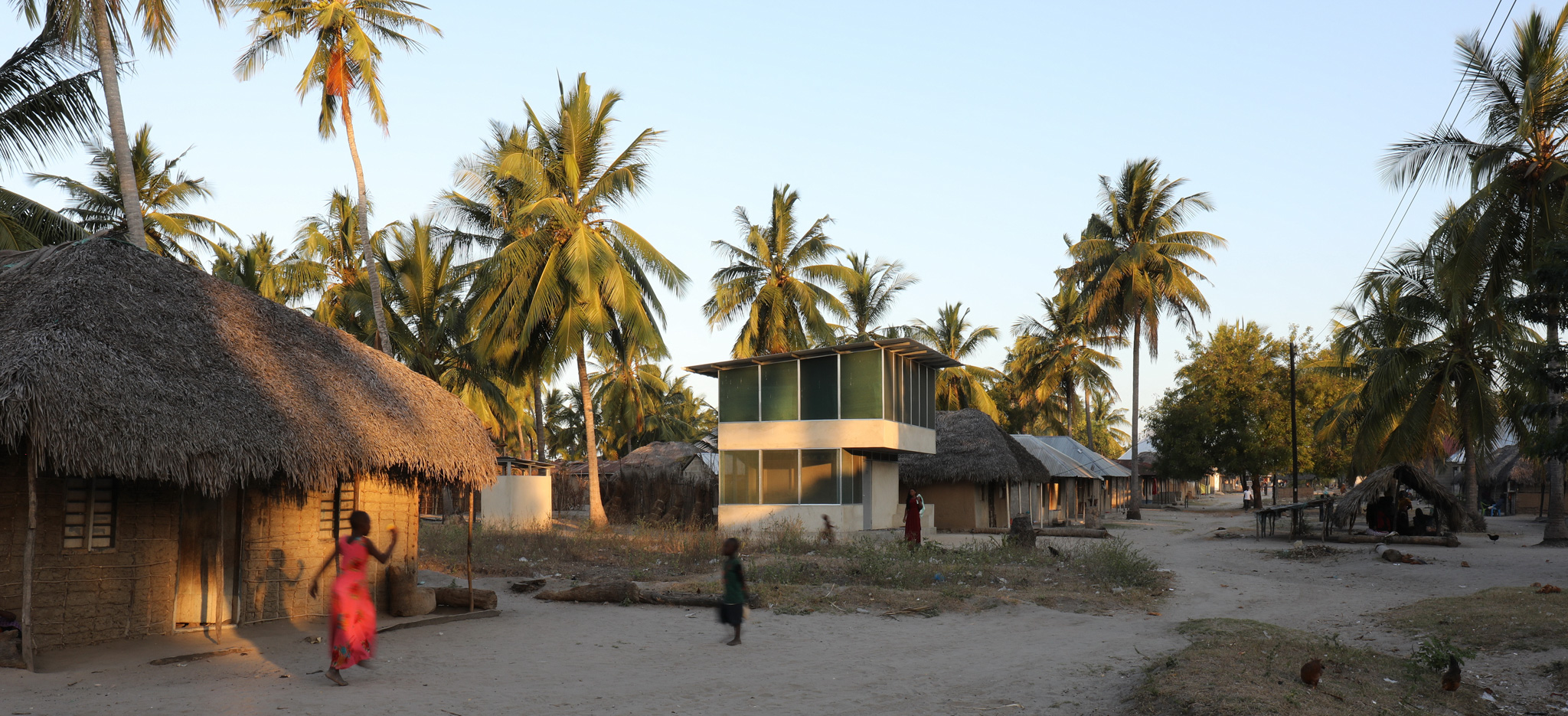
Can a well-designed house protect children from disease? We designed and built 110 prefabricated two-storey houses across 70 villages in Tanzania's Mtwara region and compared the health of the children living in them with a comparison group. The results, published in Nature Medicine in 2026: 44% less malaria, 30% less diarrhoea, 18% fewer respiratory infections, and the children grew faster. The next phase asks how the design can reach many more families.
Star Homes. With the University of Oxford and MORU, CSK Research Solutions and Durham University.
In Africa, malaria has mainly been a rural disease. Anopheles stephensi, a malaria mosquito that thrives in cities, could change that as it spreads into fast-growing urban areas. RISK studies how the physical form of the city shapes where this mosquito breeds and where people are most at risk, with Dar es Salaam as the case. By combining satellite imagery, deep learning and field data, we develop tools that help cities target planning and mosquito control before outbreaks take hold.
RISK. Led by me. Five years and about DKK 20 million from the Novo Nordisk Foundation. With the University of Copenhagen, the London School of Hygiene & Tropical Medicine and Ifakara Health Institute.
In the tropics, hospitals can become places where mosquito-borne viral diseases such as dengue spread, and a warmer climate raises the stakes. MBD-Free studies how hospitals in Zanzibar can become more resilient, examining how buildings and their surroundings contribute to transmission and developing practical adaptations together with staff and patients. The architecture matters: new wards with little natural ventilation and insufficient cooling can become almost unbearably hot for patients and staff.
MBD-Free. Funded by Danida, 2022 to 2027. Led by the University of Copenhagen with the State University of Zanzibar.
The Star Homes trial (2026) provides randomised evidence that the design of a house can measurably improve the health of children in rural Africa: children in the new houses had 44% less malaria.
Compared with conventional construction, the Star Homes house uses 69% less material mass, 73% less concrete and 57% less embodied carbon, and costs 24% less.
As head of Ingvartsen Architects in Copenhagen, I have realised buildings in Europe, Africa and Asia, bringing practice and research together.
Dean of Architecture at the Royal Danish Academy and chair of the Nordic Baltic Academy of Architecture, a network of 19 schools of architecture in eight countries.