


A

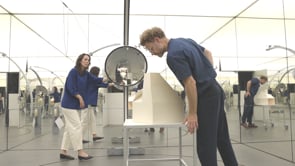
The spatial qualities of daylight are unfolded in the 'Poetic Daylight' pavilion, where the perceptual, aesthetic and poetic potential of daylight can be experienced in a series of spaces.

Daylight gives us an understanding of where we are in the world and of the spaces we inhabit every day.
The atmosphere of buildings is largely defined by daylight. We take pleasure in experiencing the changing qualities of daylight – from morning to evening – and in seeing how light and darkness shape the spaces around us. Particularly here in the Nordic countries, where there are fewer hours of daylight, there is a need to appreciate its influence on our buildings and our lives.
By focusing on the specific qualities of Nordic daylight, it is possible to create enduring spaces with a strong sense of character, where daylight supports the function of the spaces while also contributing to sustainable architecture.
In addition to its importance in architecture, daylight is also an important factor in human well-being and health. Spaces should therefore be designed to support people’s need for daylight. By making use of the natural resource of daylight as the primary source of illumination, we can contribute to the green transition while also ensuring that people receive the daylight they need.
Poetic Daylight is a development project supported by Dreyers Fond. The first stage of the project involved designing and building a pavilion as part of UIA, Copenhagen World Capital of Architecture 2023. The intention was to create site-specific architecture that communicates the poetic and sustainable potential of daylight, with the pavilion serving as a tool for understanding daylight.
The pavilion was completed on 30 June 2023 and was located at Gråbrødretorv until 1 November. During this period, the pavilion welcomed more than 100,000 visitors.
In spring 2024, the pavilion was re-erected at the Royal Danish Academy on Holmen, where it remained open and accessible until summer 2026. Here, it formed part of ongoing research into the poetic and sustainable potential of daylight, as well as teaching across several departments. It also provided a setting for a number of external collaborations.
The pavilion has also formed part of the Royal Danish Academy’s strategic work to create an even more sustainable and welcoming campus on Holmen, while making its research and teaching more visible.
The pavilion was dismantled in summer 2026 and is awaiting a new, permanent location on Zealand. When it reopens, information about its new location will be available at www.kglakademi.dk.

See the newest photos from the project: Follow 'Poetic Daylight' on Instagram.


