A


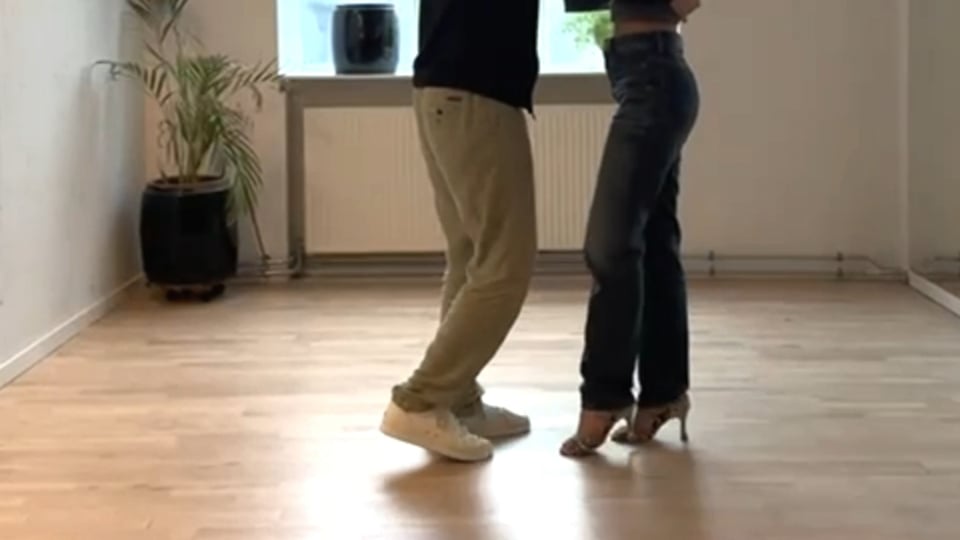
"For the last six years I’ve been spinning in salsa heels that never truly kept up. So I stopped waiting for a better option and decided to create the shoe I’ve always needed, both for myself and for every other woman or follower who’s tired of being let down by what’s on the market."
About the project
This project reimagines the Latin dance shoe as both a design and startup opportunity, addressing durability and comfort while challenging conventional aesthetics. Through materials, construction and innovation, it proposes a simpler, more progressive design that is more attuned to dancers’ needs.
In parallel, the project lays the strategic foundation for the startup 'gira' and its future production network.
Case study_ Open toed strappy heel

User insights - Problematics
To understand the reasoning for re-designing the latin dance shoe, I gained insights on its flaws and current breakage points.


Disassembly - Understanding status quo
To deepen the technical understanding of Latin dance shoe construction, several pairs were disassembled and systematically analyzed.
The analysis exposed a surprisingly complex material mix: steel shanks, synthetic fibers, suede, plastics, adhesives, and occasional staples and nails. Each material serves a specific function, steel for stability, synthetic fabrics for sweat absorption and suede for controlled glide. Yet together they form a construction that is difficult to repair and recycle.


Findings from research
From the interviews, fieldwork, disassembly, and related investigations,
three main focus areas were identified for further sketching and prototyping:
Low comfort
Breakage points
Complex construction
Ideation - Sketching
A series of sketches were produced to explore alternative design directions, investigating variations in silhouette and structural expression.
Before sketching freely, the key points of surface connection were defined, these are the areas where the shoe must firmly hold the foot in place to ensure a secure fit. These were identified as the heel counter and ankle wrap, the arch and instep, and the forefoot.
Since fit is fundamental to dance shoe performance, these connection points served as anchors for the sketching process, guiding decisions about shape and construction rather than treating aesthetics as the starting point.


Testing - prototyping - models
Initial prototypes of the upper were rough explorations of paper models used to rapidly investigate form and proportions. A shoe last was used for more refined iterations with tape, drawing the designs directly onto the last and using these as pattern parts for sewing. Furthermore the last was thermoformed in plastic in order to draw directly onto them and compare shapes and aesthetics. Later models involved sewing fabric samples to evaluate material behavior, durability, and fit under realistic conditions.


To translate the insights into a real world design and business, I began actively cultivating relationships with skilled professionals in design, production, and related fields. I viewed this as a strategic investment in both the project and its potential future as a startup. By involving relevant experts early and keeping them informed about the process, I aimed to bring them on board as engaged collaborators rather than late-stage consultants. This approach fostered a sense of co-creation and participatory design, allowing the product development to be guided by the collective expertise of those involved.
I visited production sites in portugal and Barcelona as a part of this network building and industry understanding.
Industries visited
StartUp ambition
The absence of innovation in the Latin dance segment points to more than a design problem, it signals an untapped market opportunity. This project merges design thinking with entrepreneurial strategy to investigate how a redesigned dance shoe, built around durability and contemporary aesthetics, could address an underserved need.
'gira' - name of StartUp
verb [ hee-rah ]
Present él/ella/usted conjugation of girar (to turn) or affirmative imperative tú conjugation of girar (to turn)
The brand, Gira, is named after the Spanish word for “spin,” reflecting the frequent turns performed on the front foot in latin dance.
The name also references the girasol (sunflower), which turns toward the sun, an idea echoed in the flower-inspired spin pattern on the sole.
Technical drawings
The Latin dance shoe, gira, is designed with a simplified construction, using mono-material components and an enhanced stitched assembly.


Carré toe box
The decision to make the toebox square is to make more space for the toes to be able to spread during spinning to give better balance. It is also a silhuette not currently available in latin dance shoes, but in fashion, offering a different aestetic.

Design proposal
It features a clean, modern aesthetic, along with an improved upper and sole that better accommodate stretch and pressure points for increased comfort.

Sole
The injection molded sole incorporates a build in spin point to ease the spins and enables the upper to be stitched directly onto it through the build in sticth allowance.


Summary of project
This project set out to investigate how Latin dance shoes could be redesigned to enhance durability, comfort, and production, while simultaneously building the strategic network necessary to support startup realization. Through a combination of market analysis, user research, disassembly studies, material exploration, and iterative prototyping, the research has demonstrated that the Latin dance shoe, despite its niche status, presents a well-founded and timely case for structural design innovation.
The findings reveal that the current state of the market is characterized by stagnation rather than scarcity of opportunity. Existing products share nearly identical construction logic: adhesive-dependent assembly, inflexible and narrow forefoot designs, and material combinations that prioritize low-cost production over longevity or repairability. These are not incidental weaknesses but systemic ones, and they point toward clear directions for redesign. The proposed shift toward an injection molded all-in-one sole, external stitching as a primary joining method, a wider and more anatomically considered forefoot, enhanced insole cushioning and 3D knitting as an upper material represents a coherent response to the breakage and comfort issues identified through both user research and hands-on disassembly.
Crucially, the project has treated the product and the business not as separate concerns but as mutually shaping ones. Design decisions about construction and materials have direct implications for manufacturing partnerships, production scalability, and market positioning and these strategic considerations have in turn guided which design directions were worth pursuing. The network built throughout this process, encompassing 3D knitting manufacturers, injection-molding firms, dance shoe brands, and industry professionals, is not secondary to the project but central to its Feasibility.
What this project ultimately proposes is that to achieve meaningful innovation within a niche market you need to ask more precise questions about why existing solutions look and function as they do. By developing an in-depth understanding of dancers’ needs, industry practices, market dynamics, and emerging technologies, the project seeks to meaningfully merge business and design into a holistic approach that not only rethinks the product itself, but also the systems, values, and assumptions that shape its development and use.
A special thanks to all actors involved
Supervisors
Lasse Løgstrup Jespersen (CEO, LAST studio, Copenhagen)
Fieldtrip to Portugal
Joaquim Ferreira Pindo Ida (Shoe production and export company)
3D and injection molding
Steff Equilibro (Shoe design & production, China)
Jordi Montaner (3D knit designer, Barcelona)
Dancers
All the dancers who contributed with their insights and experiences
Others