A

Interwoven Responsibilities
— Care, Compliance, and EU Sustainability Regulation in Danish Fashion
The project investigates the tension between care and compliance in fashion. As new EU regulations require more documentation and traceability, the project explores what forms of responsibility become visible, and what may remain harder to measure. Weaving is used as a material way to analyse and communicate these tensions.
This thesis, co-authored with Pallavi Yadav, examines how three anonymised Danish fashion organisations relate to EU sustainability regulation, and what it means to care for materials, people, and environments when compliance is increasingly demanded.
The project worked with two concepts that might seem straightforward but turn out to be layered.
Compliance, in this context, refers to the formal obligations that regulation places on organisations: what must be reported, documented, and evidenced in relation to sustainability.
Care refers to something less codified. It describes the attentiveness organisations direct toward their materials, their supply chains, their users, and toward what happens to garments after use. These are practices that may be deeply embedded in how an organisation works without necessarily being visible in regulatory terms. The project asked how these two things relate to each other in practice.

For a long time, sustainability in fashion was largely voluntary. Organisations set their own ambitions and certified what they chose to. Over the past several years that has changed. A range of EU instruments have introduced binding expectations for how organisations must account for their sustainability practices: mandatory reporting obligations, requirements for supply chain due diligence, restrictions on environmental claims, and frameworks for product-level transparency.
The three case organisations differ substantially in size and orientation. One is a small company consisting of around ten people. One is a mid-sized company with a pronounced sustainability focus. One is a larger, family-owned business with its own production.
The research drew on semi-structured interviews with one representative per organisation, supplemented by document analysis of sustainability reports, public disclosures, and regulatory documents.
The aim was not to compare how well each organisation performs on sustainability. It was an interest in how the same regulatory environment lands differently depending on what it meets.

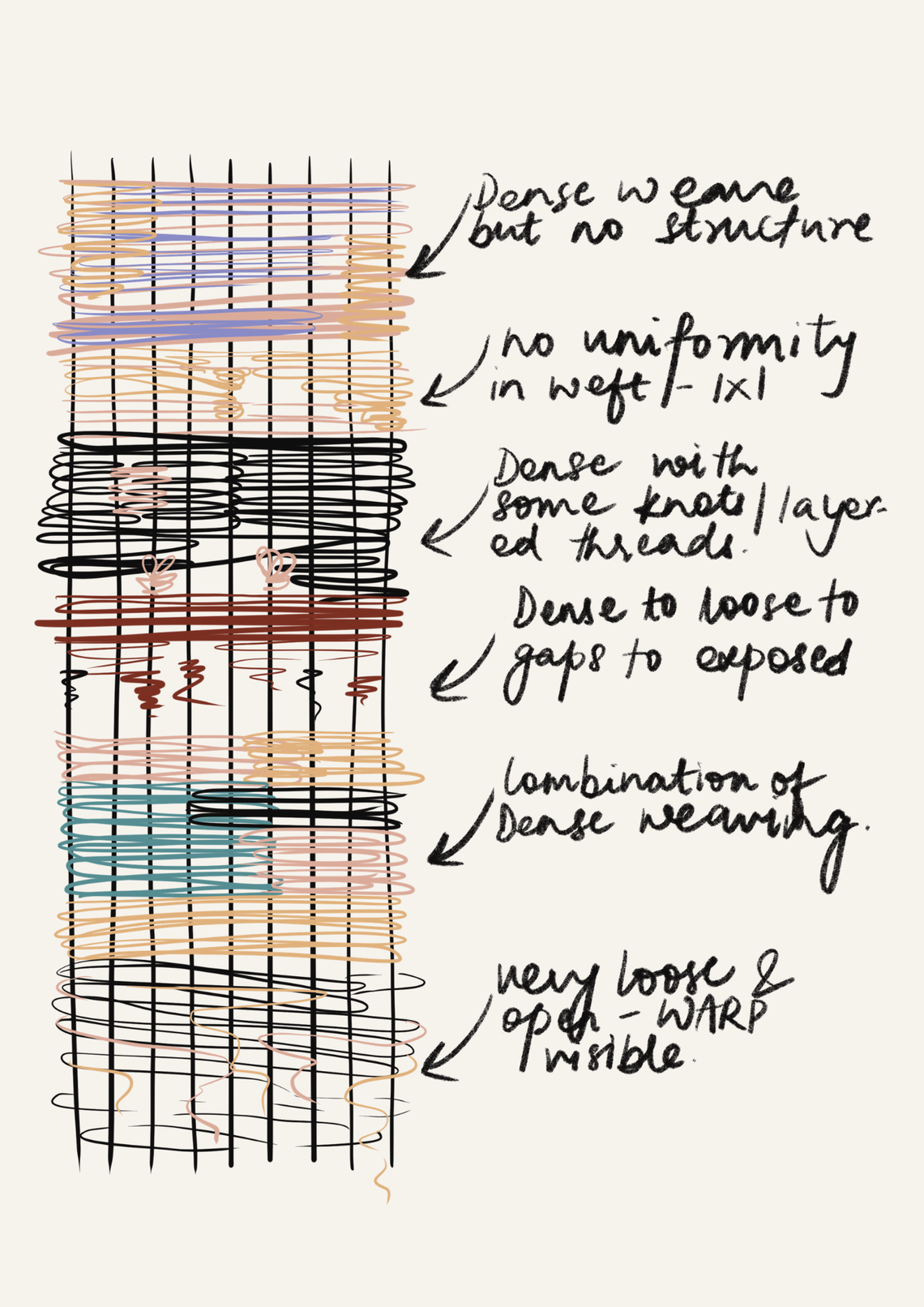
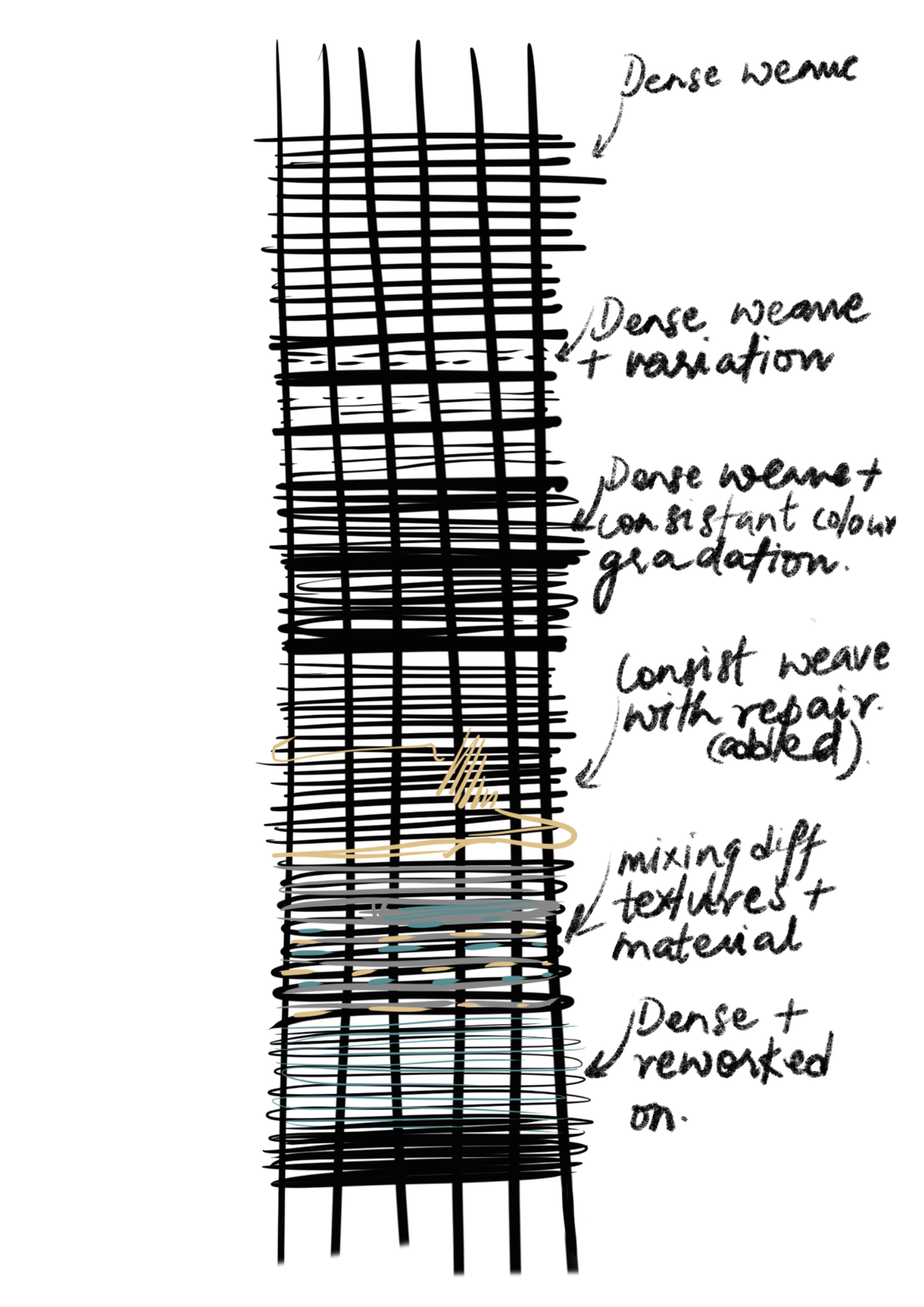
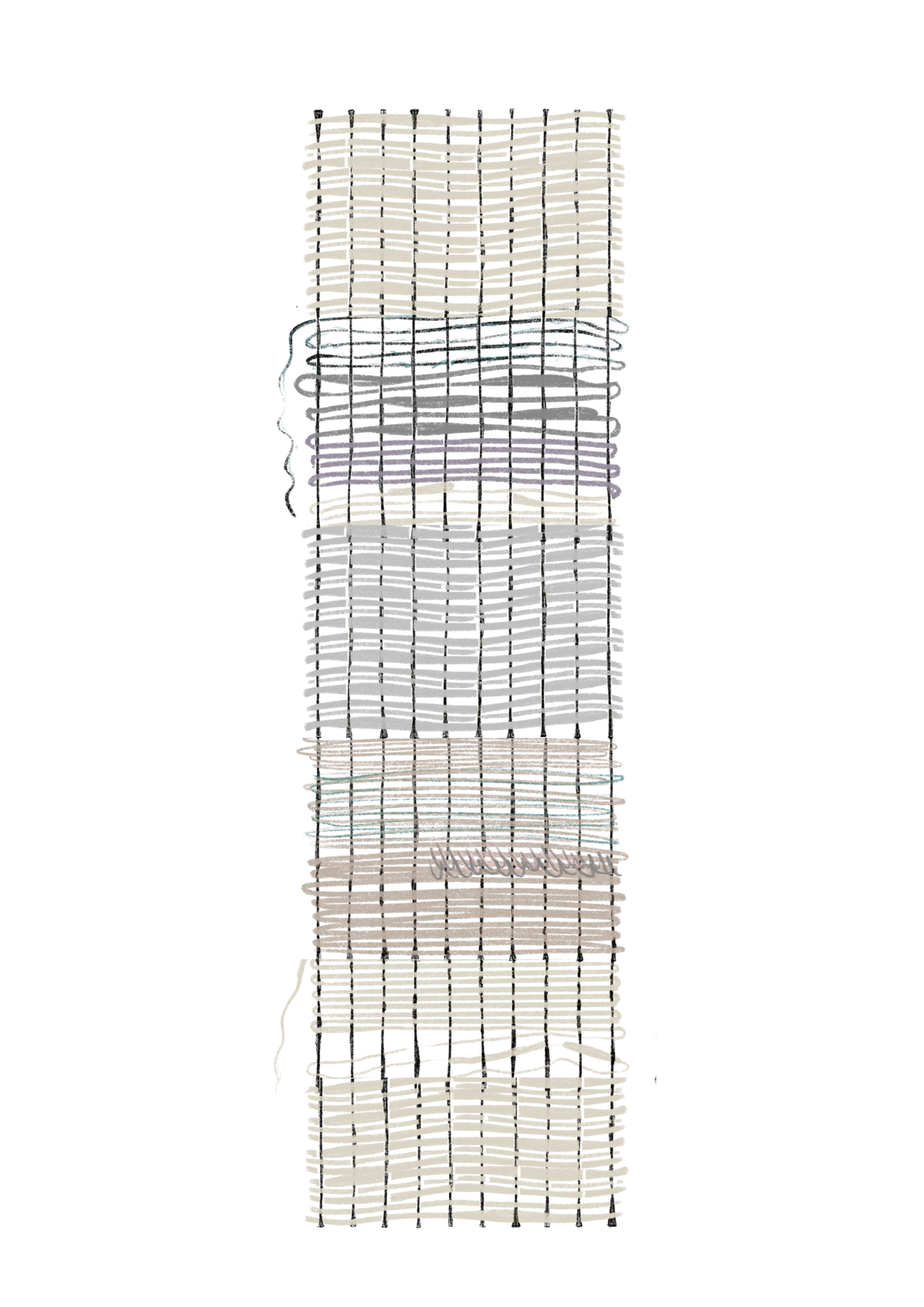
Weaving entered the project later than planned. After the interviews had been conducted and the coding had begun, some of the tensions in the material felt hard to work through in writing alone. Writing allows a certain ambiguity. Once the decision was made to weave, choices had to be more concrete: which parts of each organisation's story mattered most, which colours and fibres made sense, how dense a section should be and where gaps or interruptions belonged.
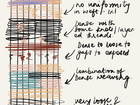
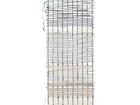
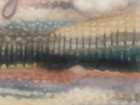
Neither researcher came to the project with a weaving background. The method was chosen for its conceptual fit, not technical familiarity. Three sustained textile interpretations were produced on a rigid heddle loom, one per case organisation, using donated yarn scraps. No new materials were purchased.
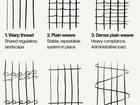
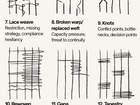
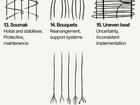
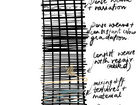
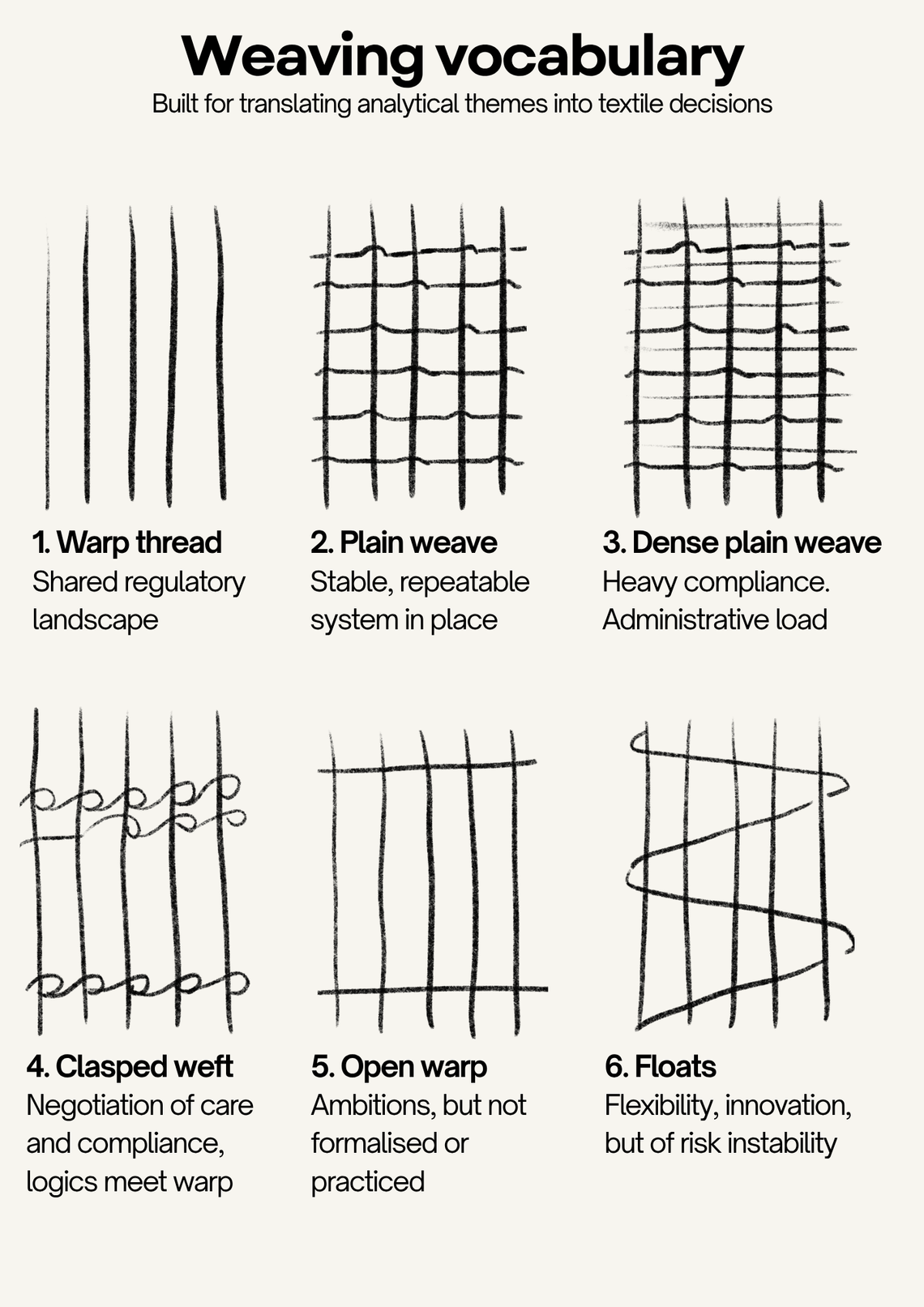
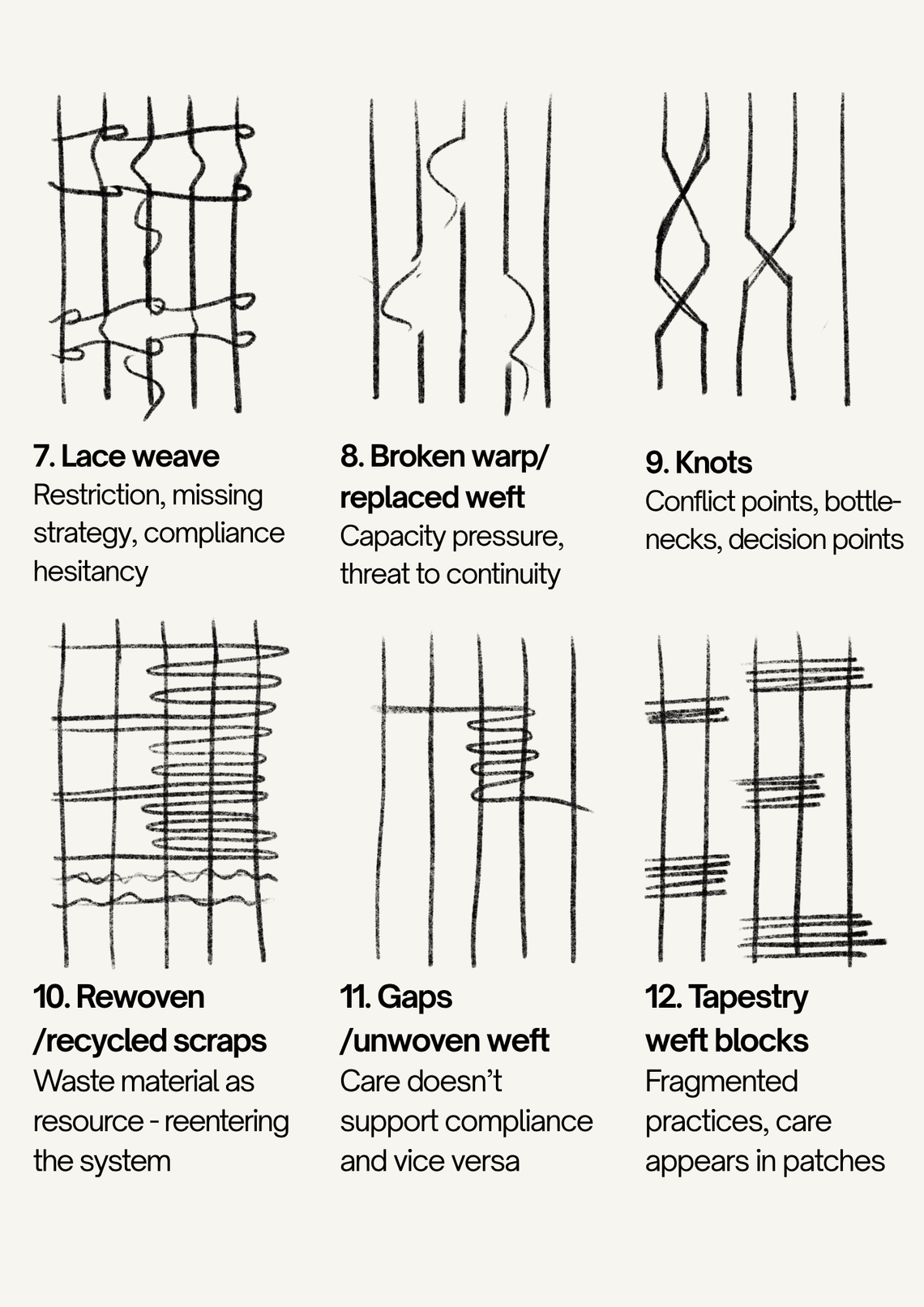
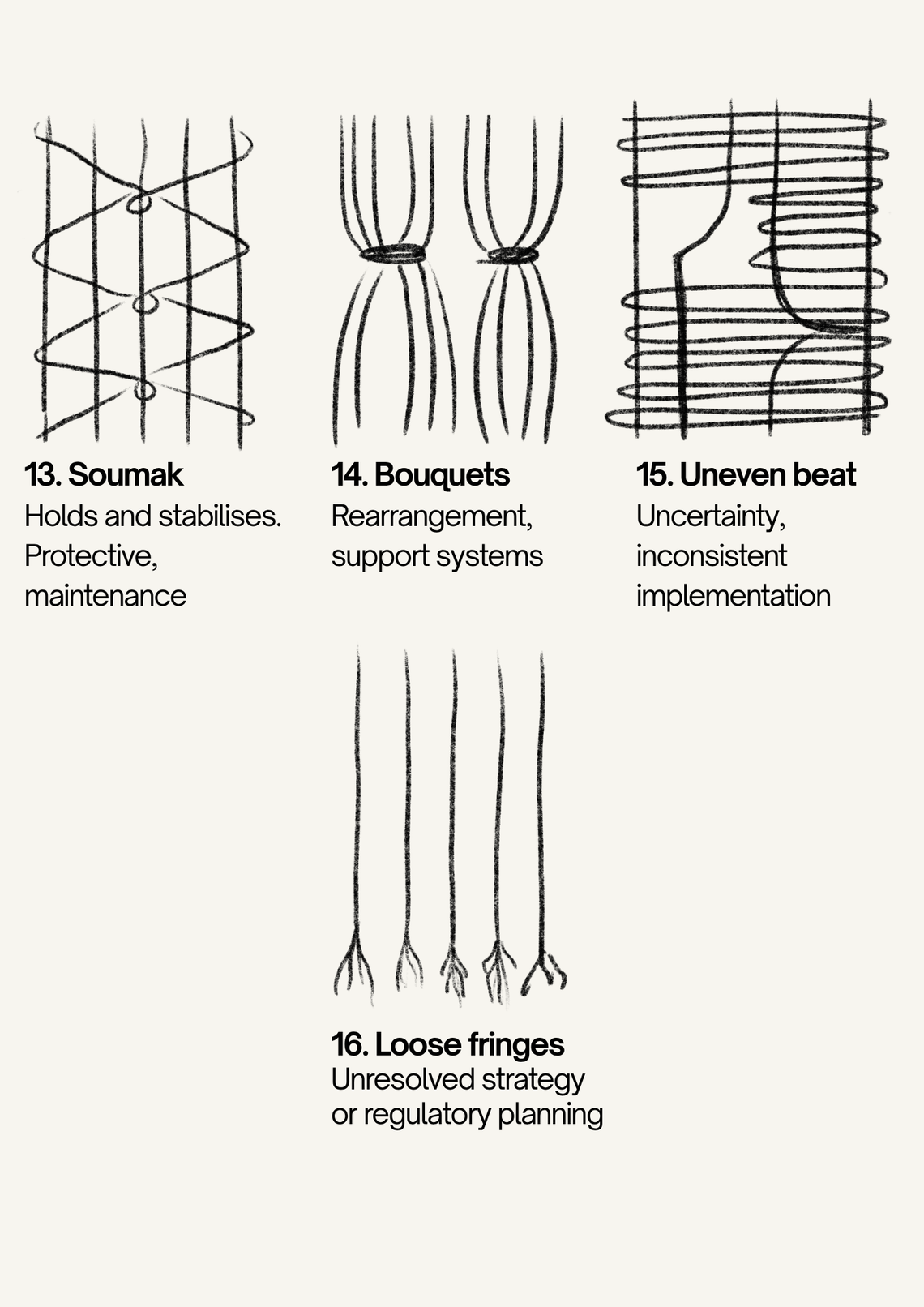
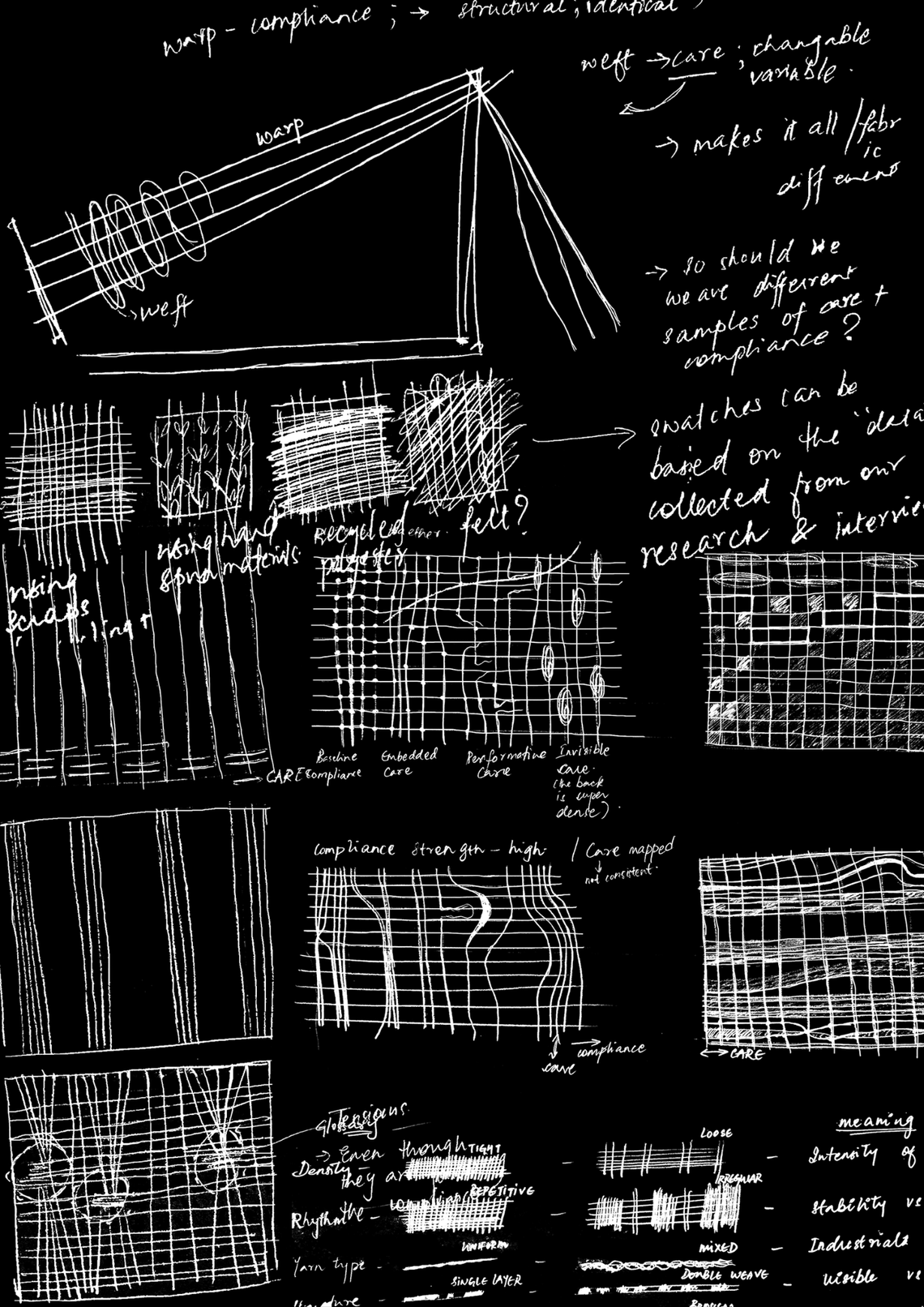
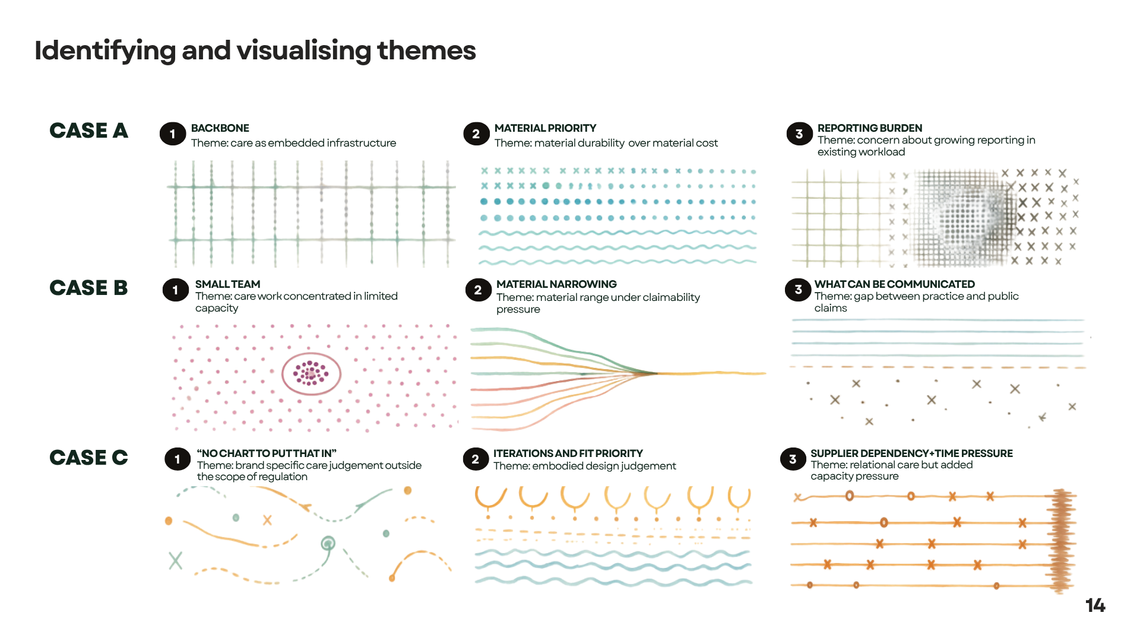
Each textile was structured around a distinction that emerged from the research itself. The warp represents compliance: a structural constant running through all three organisations regardless of their values or orientation. The weft represents care as it appeared across each case, differently textured, differently dense, sometimes integrated closely with the warp and sometimes pulling against it.


Each textile was structured around a distinction that emerged from the research itself. The warp represents compliance: a structural constant running through all three organisations regardless of their values or orientation. The weft represents care as it appeared across each case, differently textured, differently dense, sometimes integrated closely with the warp and sometimes pulling against it.
The loom was not a neutral tool. It actively shaped what was possible. Some structures that looked workable in a sketch became too dense or too slow at a larger scale. Some colours changed when woven together. Adjusting to those constraints was part of the analytical process, not a detour from it.

"Sustainability has always been a backbone of the company." (Case A)
"The sustainability department is one and a half people." (Case B)
"There's no collective idea on what sustainability is for us." (Case C)

The project began with an assumption; Care and compliance seemed, at the outset, to sit in opposition: one formal, external, and measurable; the other relational, embedded, and harder to verify. The expectation was that studying the two together would mean tracking where they came into conflict.
Working through the empirical material complicated that. It became difficult to say that a small sustainability team meant less care, or that a well-resourced compliance structure indicated deeper responsibility. The cases were more entangled than the initial framing allowed.
The loom made this clearer. In weaving, warp and weft are distinct but inseparable. They produce something neither could produce alone. That is closer to what the research found: not care and compliance in opposition, but care and compliance as interwoven logics, shaping each other differently depending on the organisation.

One thing we did not fully anticipate once the textiles were finished: While we were weaving, the decisions felt part of the analysis: which yarn, which tension, why one section needed to be dense and another more open. A completed piece does not carry that with it. Someone seeing it for the first time has no way of knowing what each section holds, or why it looks the way it does. Without that context, it cannot do what it was made to do.
We found the same thing in the research. Care in the organisations also lives in process: in supplier relationships developed over years, in design conversations, in material judgements that never get written down. For any of that to be recognised by a compliance framework, it has to become something more fixed. A document, a data point, something that can be checked. The textiles ran into exactly that problem.