A

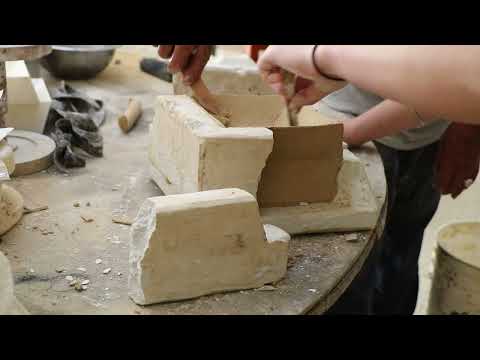
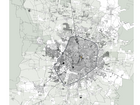
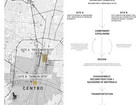
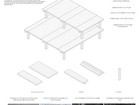
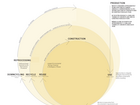
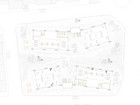
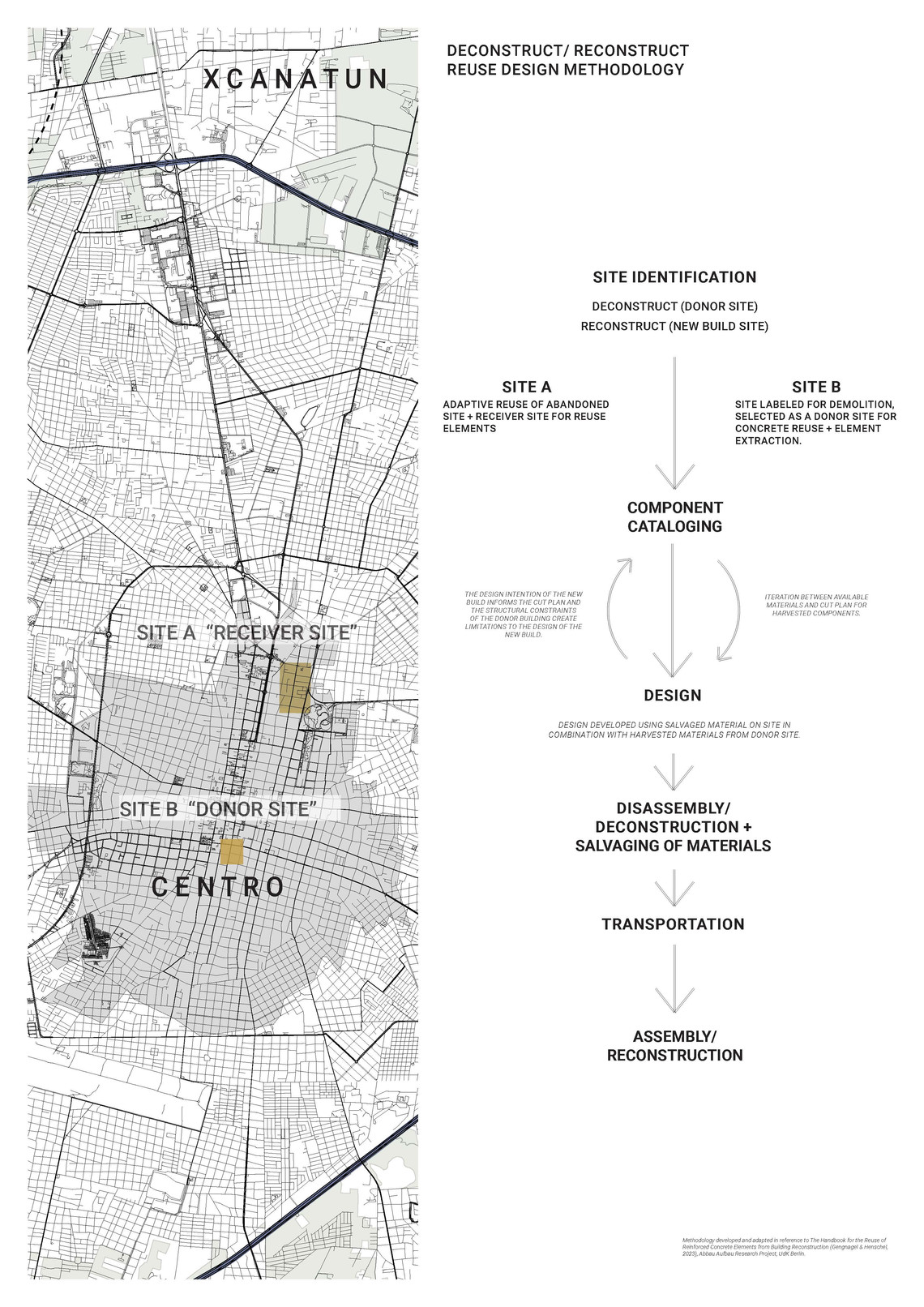
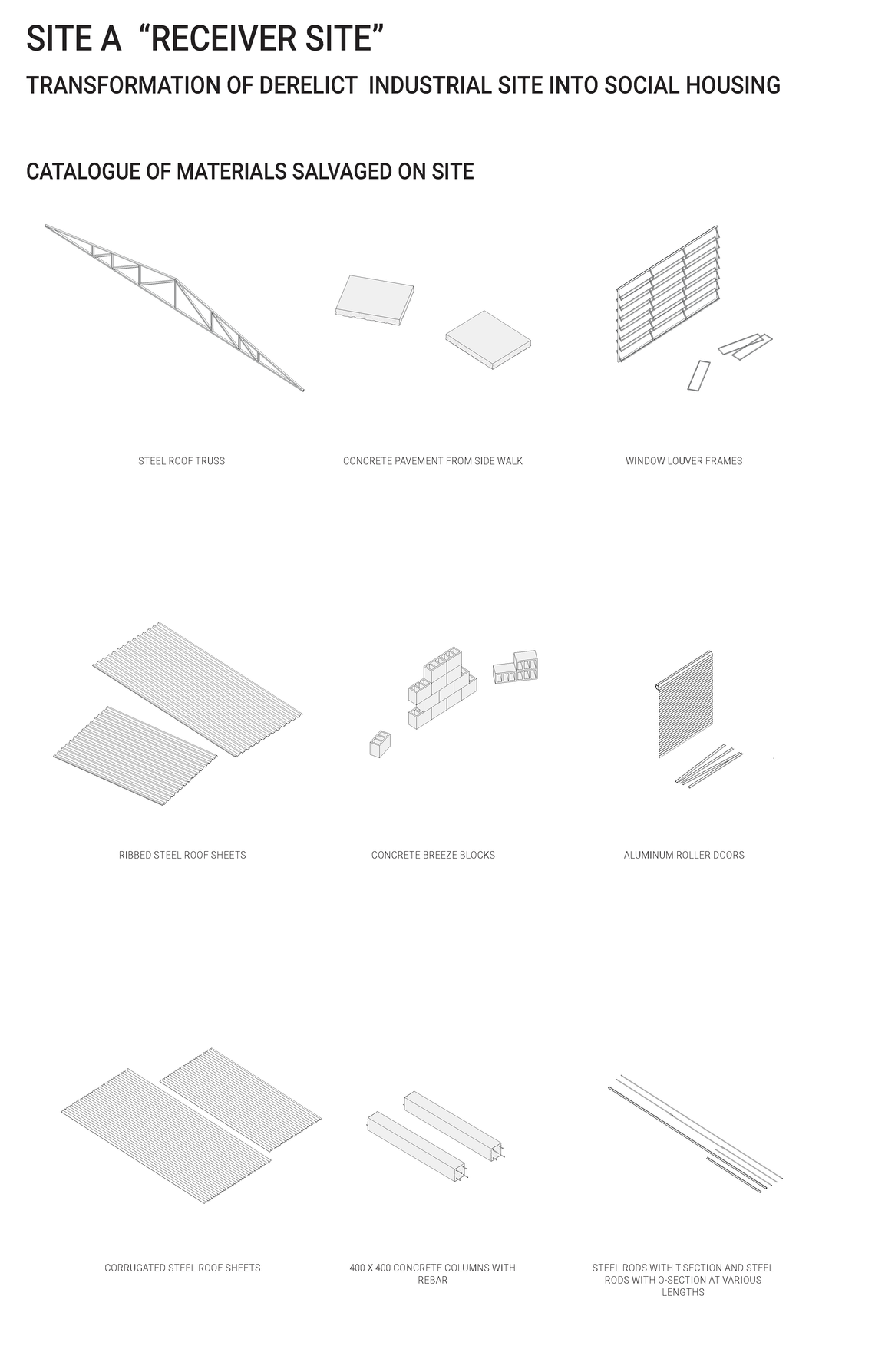
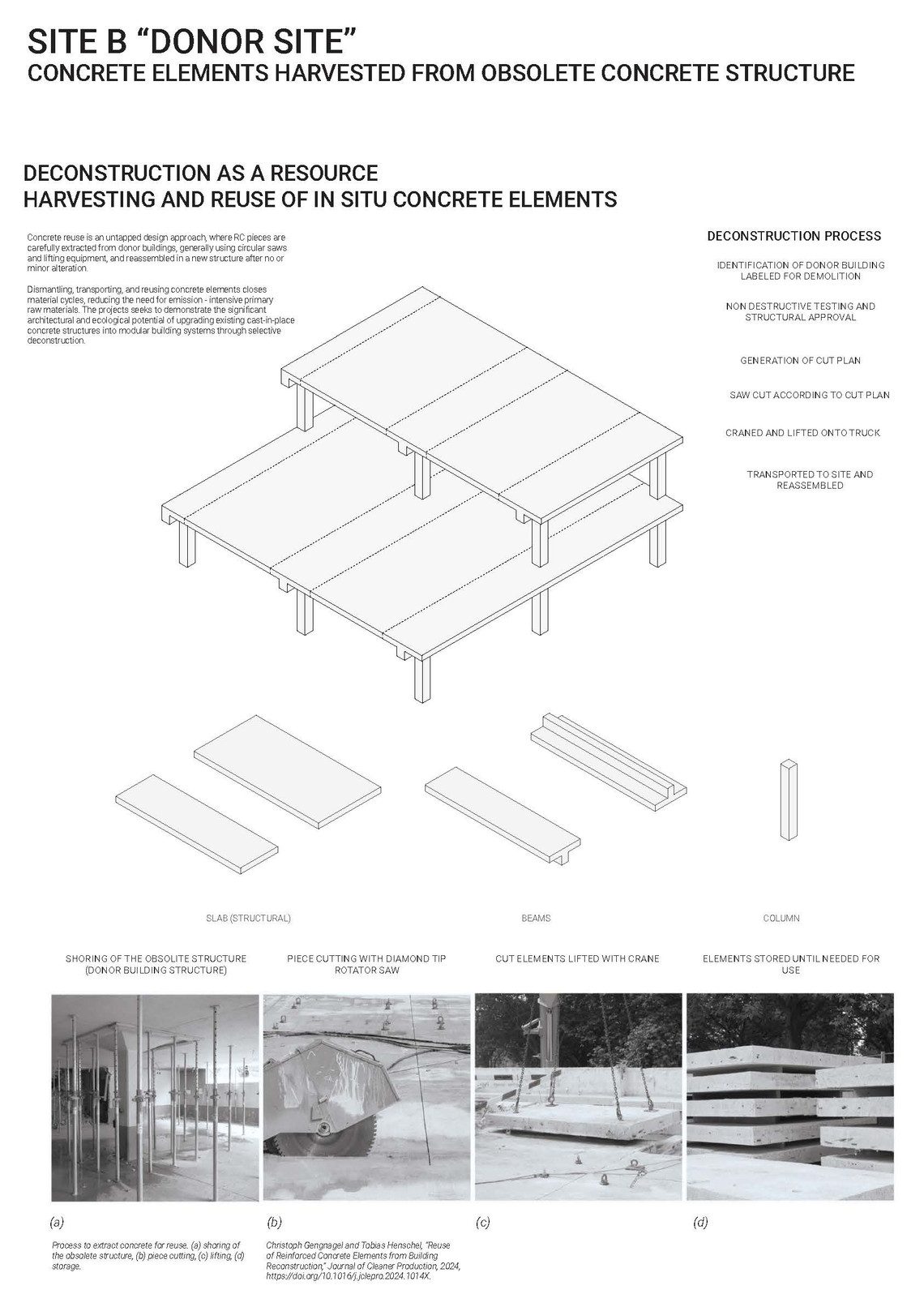
“Deconstruct/Reconstruct” investigates systems of material reuse through the transformation of a derelict inner-city industrial site into mid-density social housing in Merida, Mexico. Grounded in emerging research into structural concrete harvesting and reuse, particularly the work of Celia Kupfer on the extraction and reintegration of in-situ cast concrete elements from buildings designated for demolition, the project explores how existing urban material stocks can become resources for future construction. Through the mapping of material networks between a vacant industrial "receiver site" and a nearby commercial "donor site", the proposal develops and celebrates a tectonic assemblage of reclaimed concrete elements.
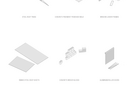
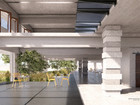
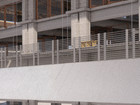
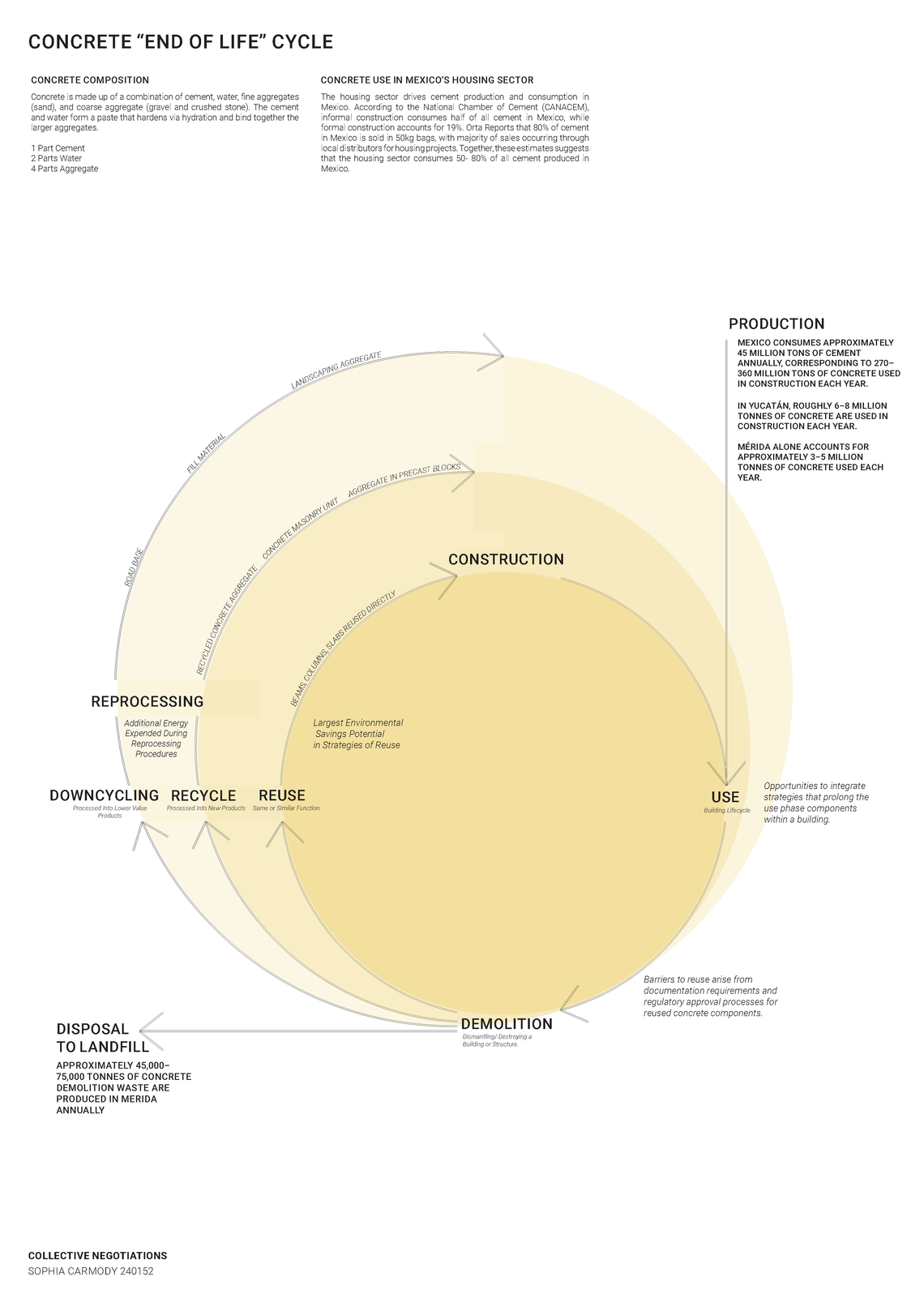
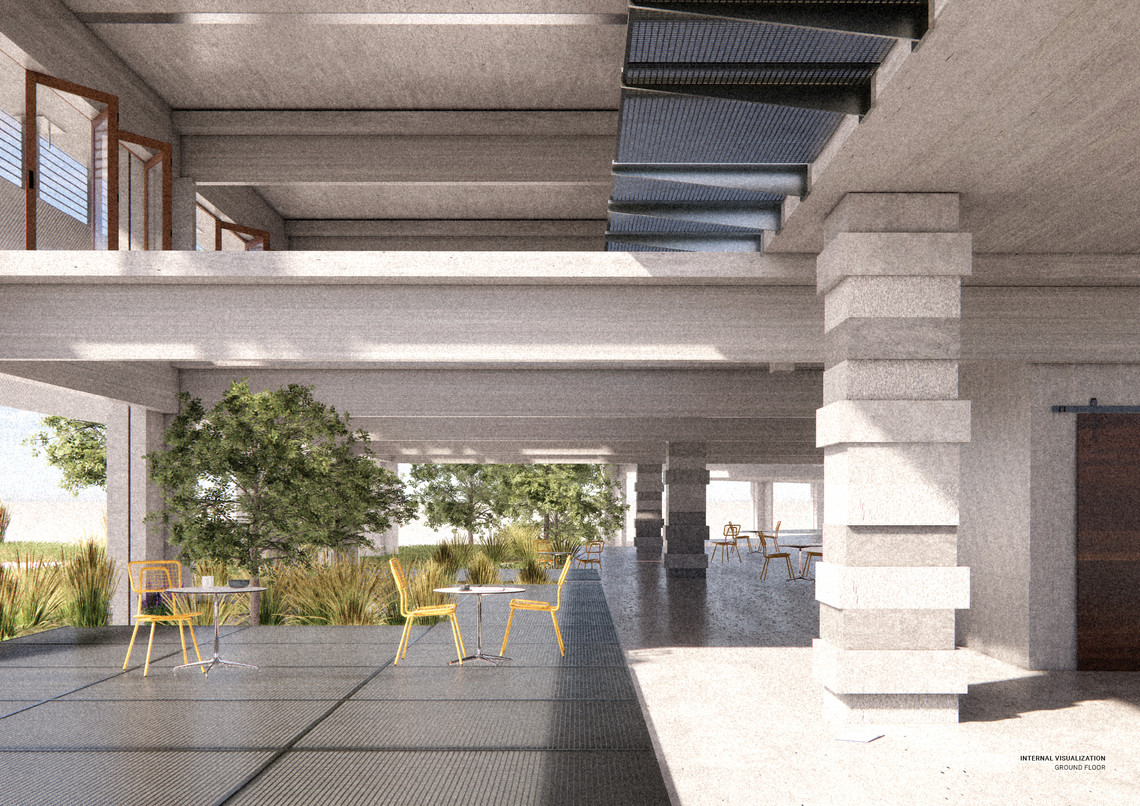
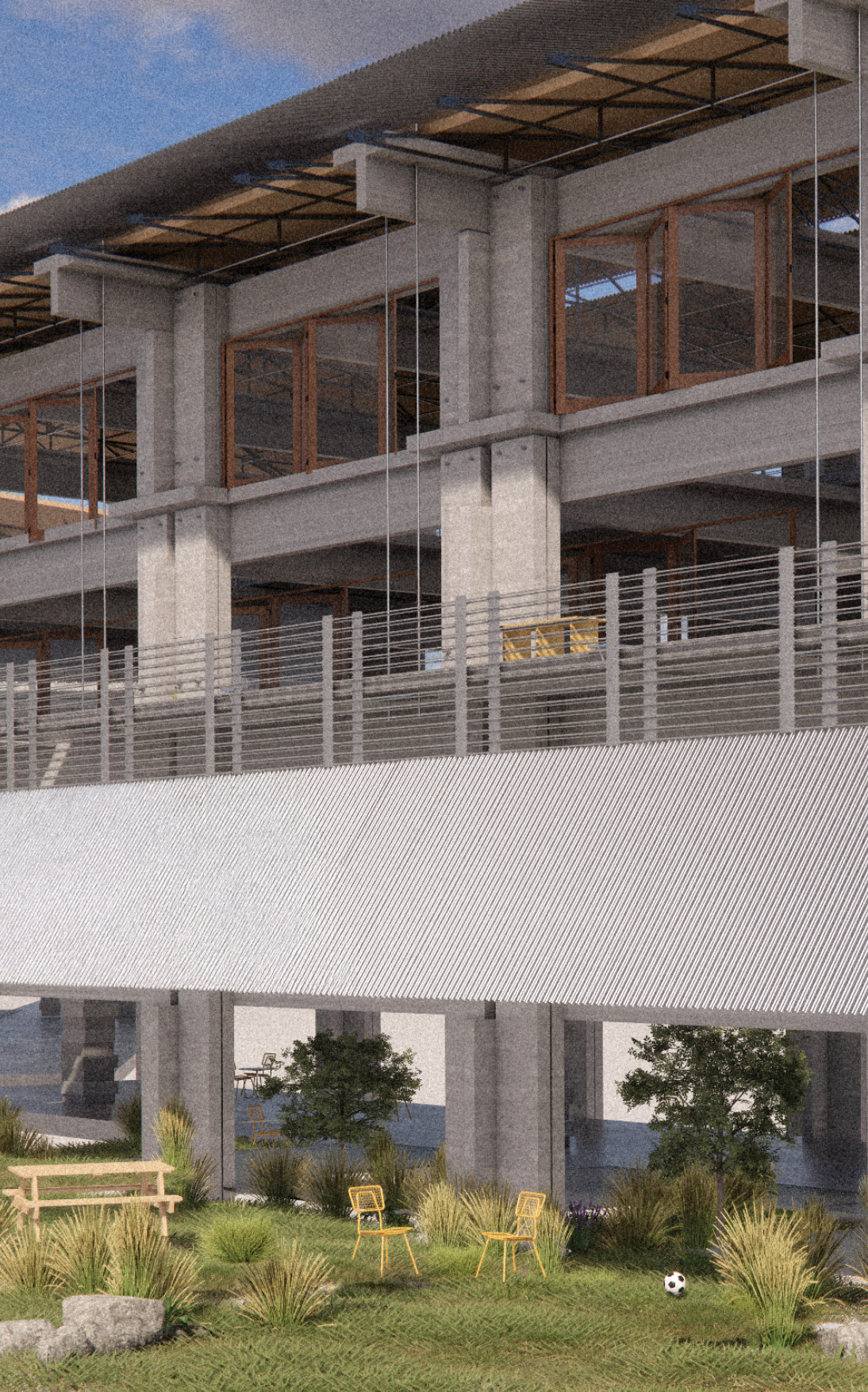
Rather than treating demolition as an endpoint, the project proposes a circular material framework in which concrete slabs are harvested, catalogued, tested, transported, and reassembled into new structural systems. The resulting architecture openly expresses the scars, cuts, and imperfections of reuse as evidence of material history and previous occupation.
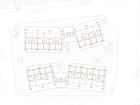
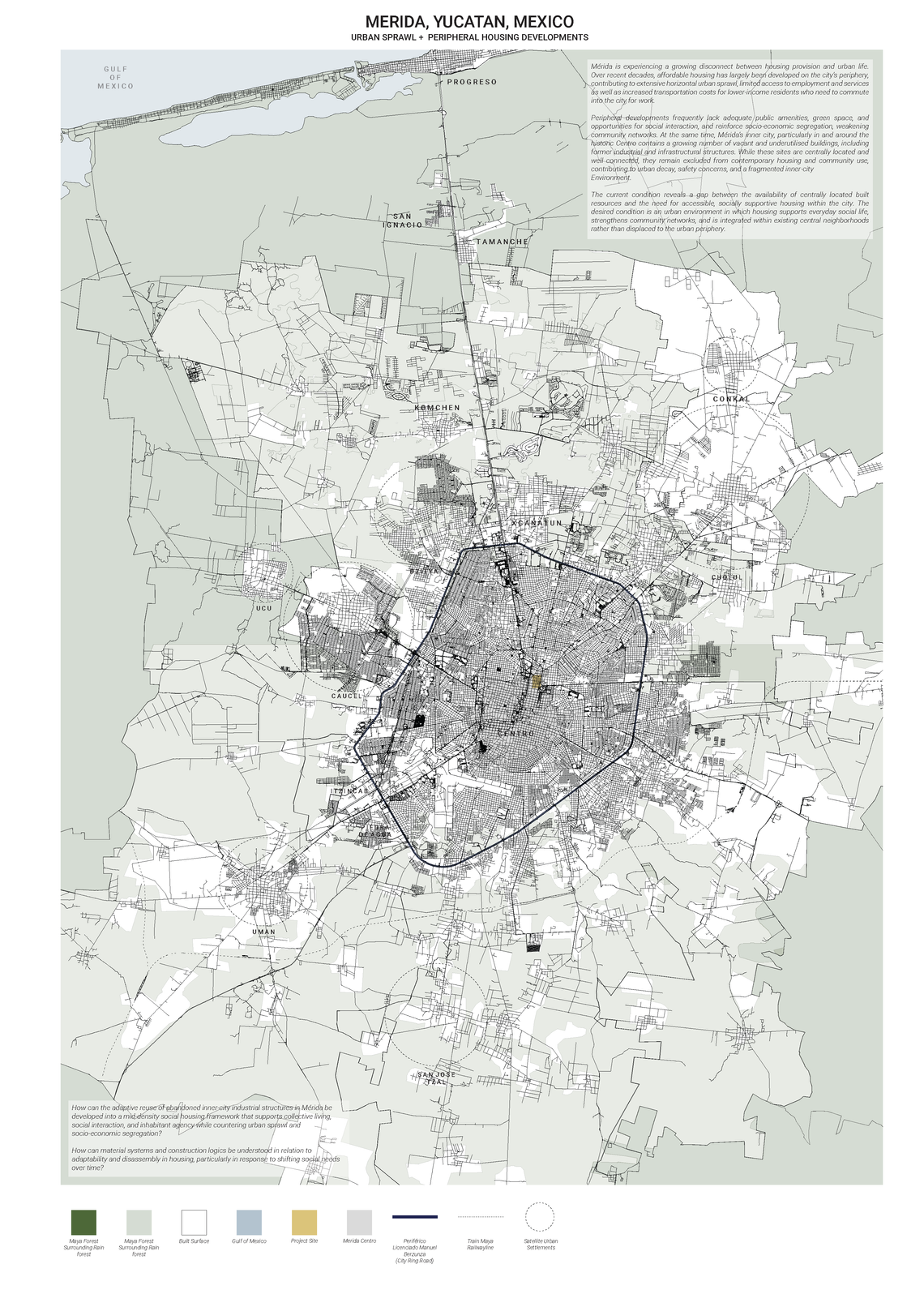
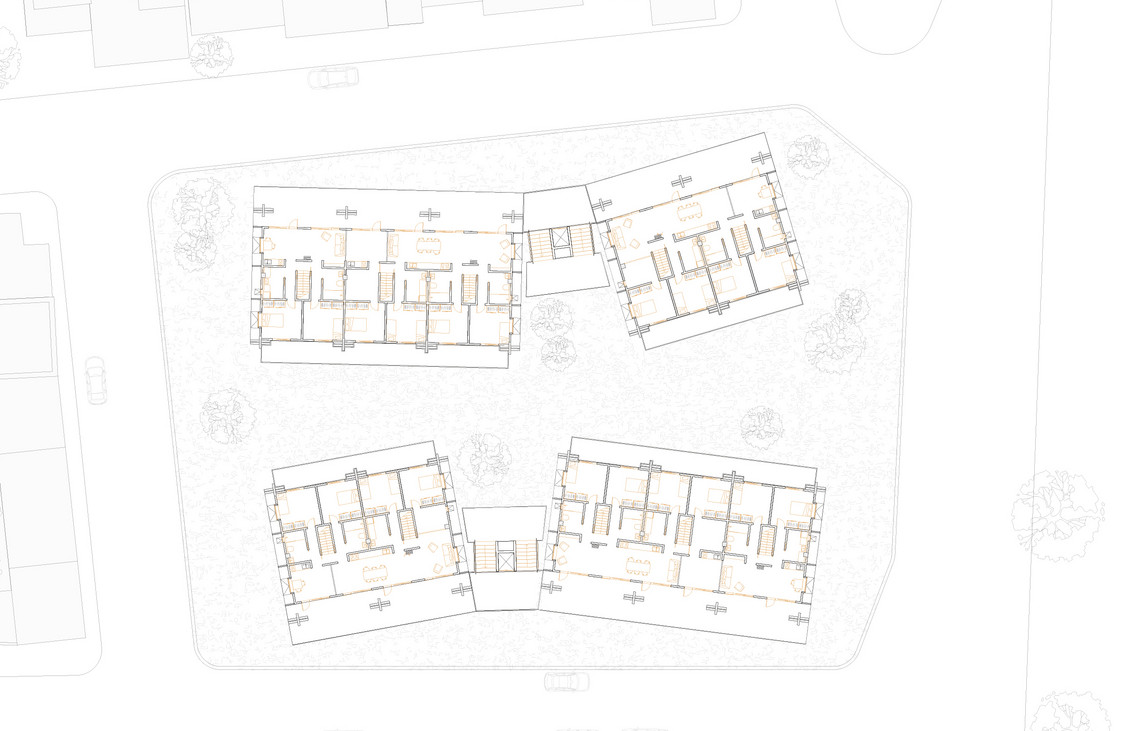
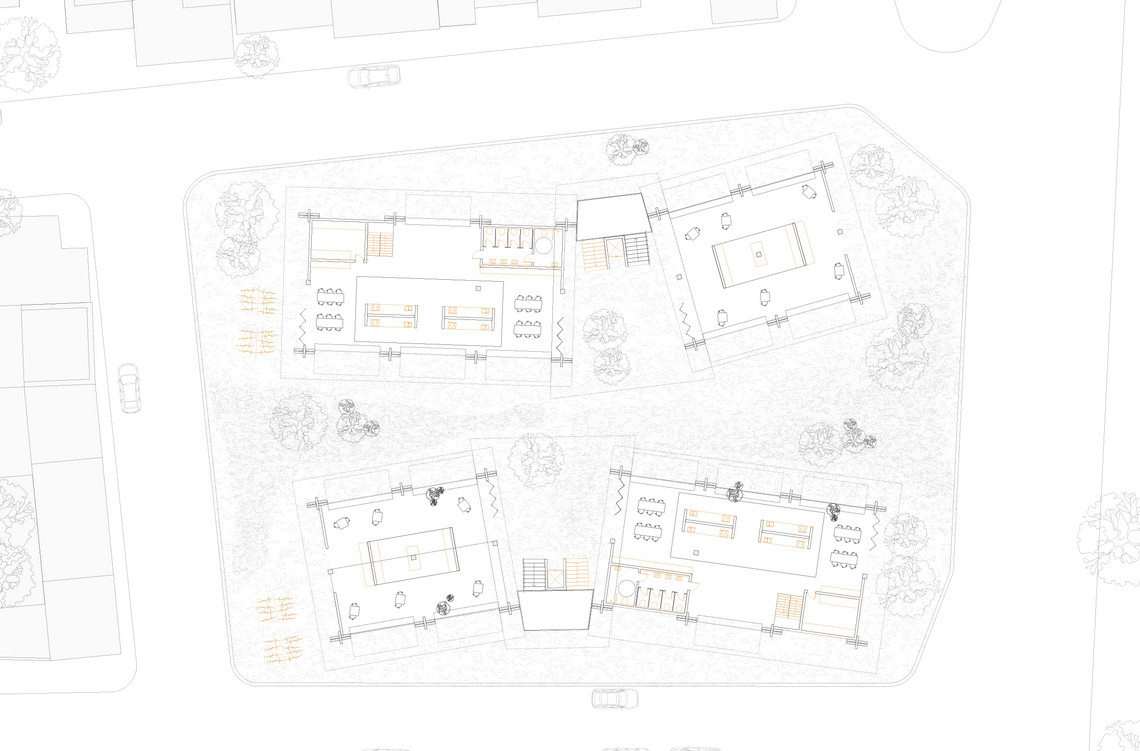
This material investigation is applied to the challenge of affordable housing in Mérida, where peripheral housing expansion continues to drive urban sprawl while vacant inner-city sites remain underutilised. The proposal reimagines one “demonstrator site” as a socially supportive housing community.
Designed for Mérida's tropical climate, the project employs passive cooling strategies including cross-ventilation, shading, vegetation, and stack-effect ventilation. While acknowledging the legislative, logistical, and environmental challenges associated with large-scale structural reuse, the project positions architecture as a vehicle for testing alternative material futures and more circular approaches to urban development.