A

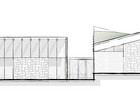
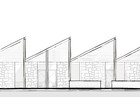
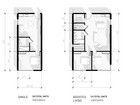
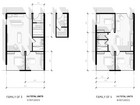
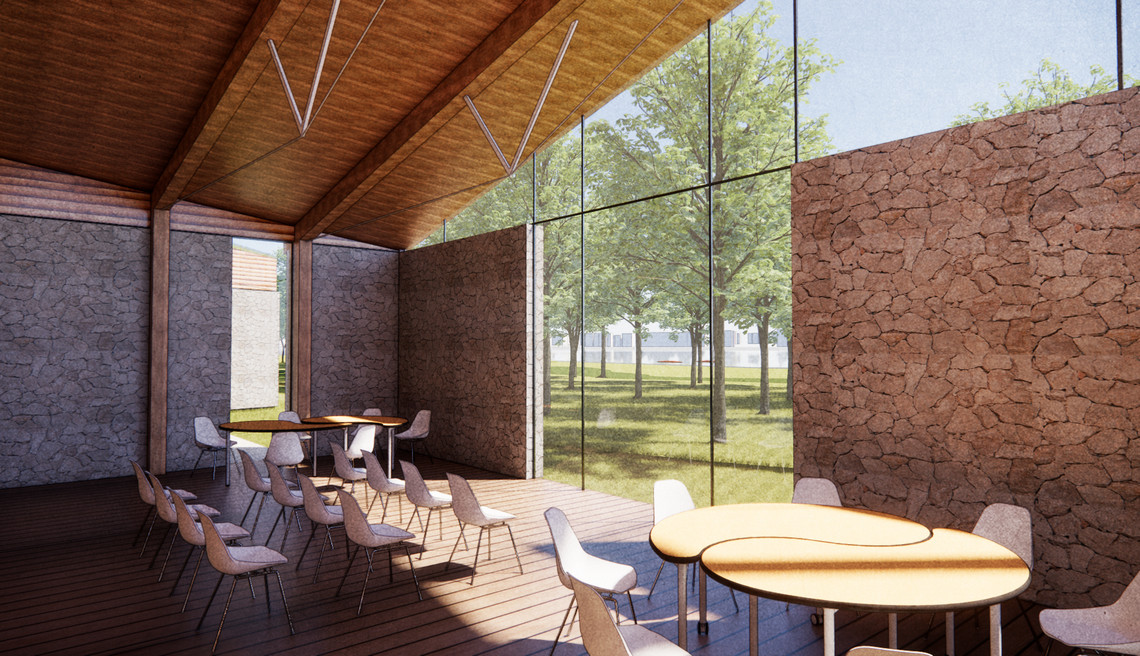
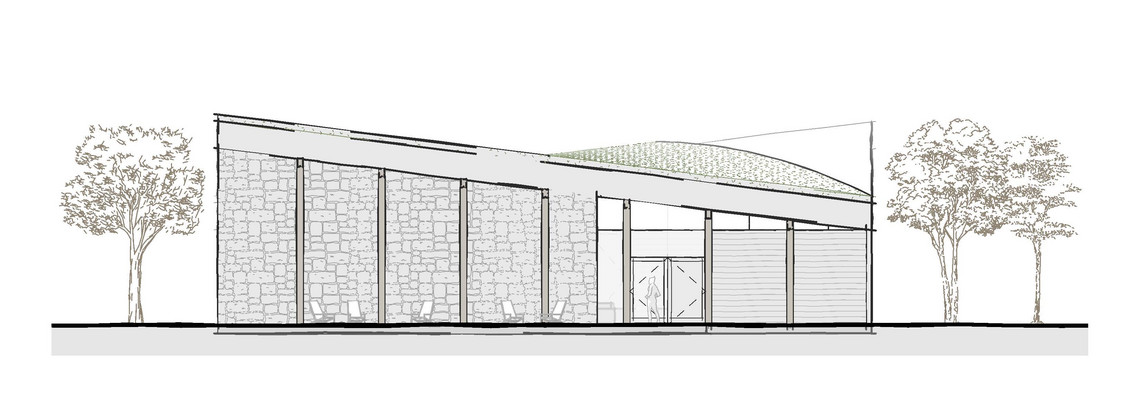
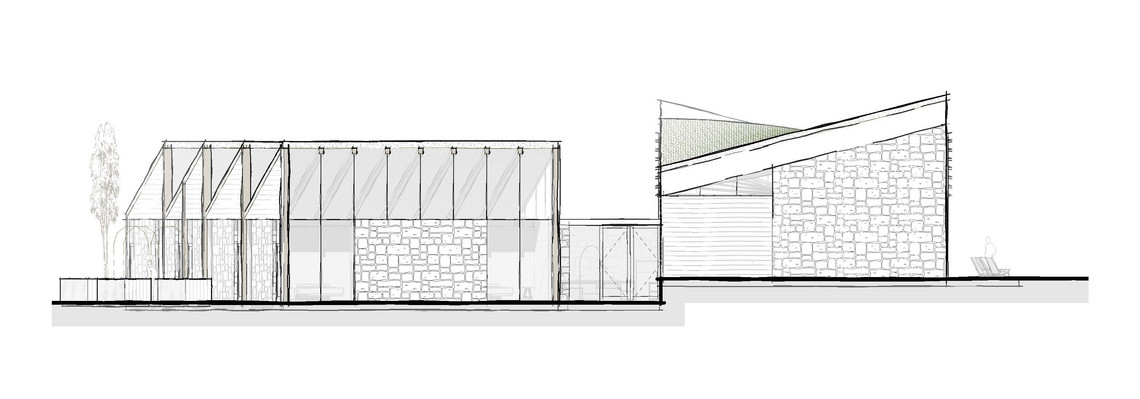
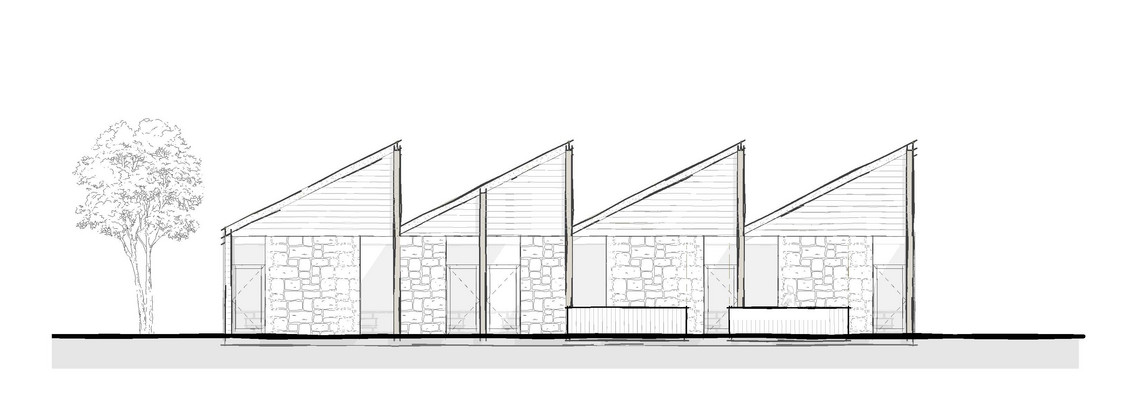
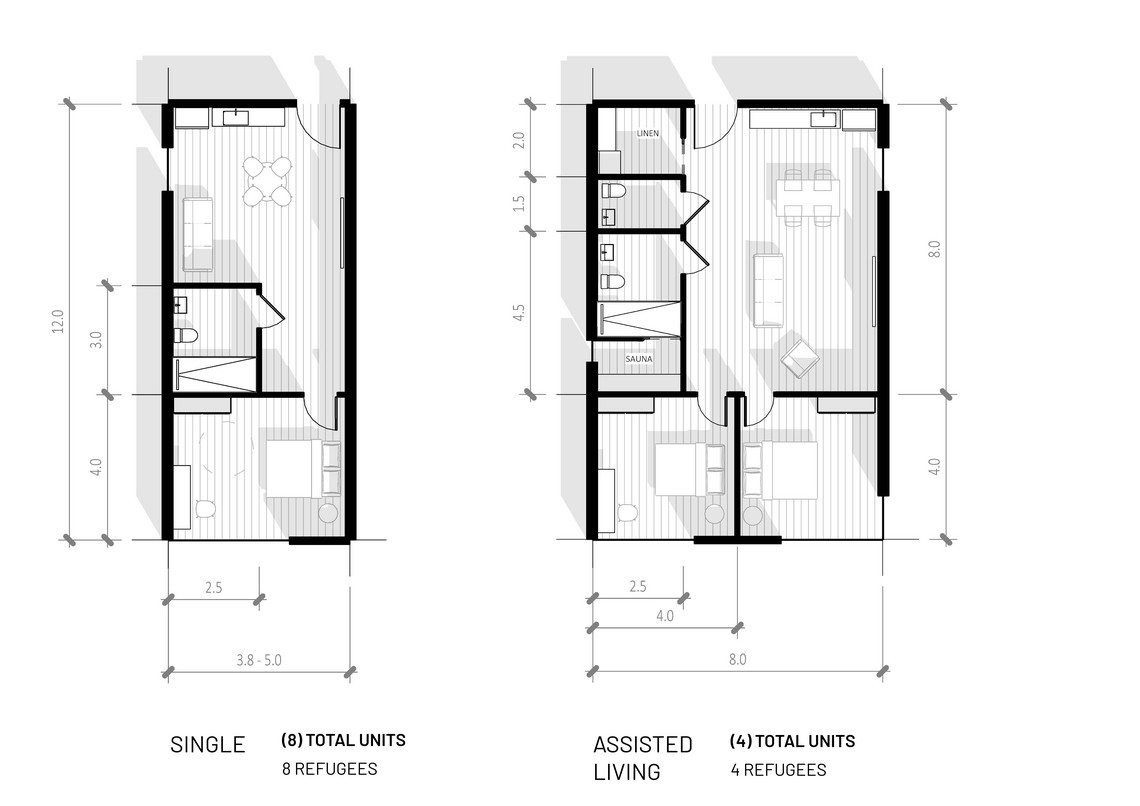
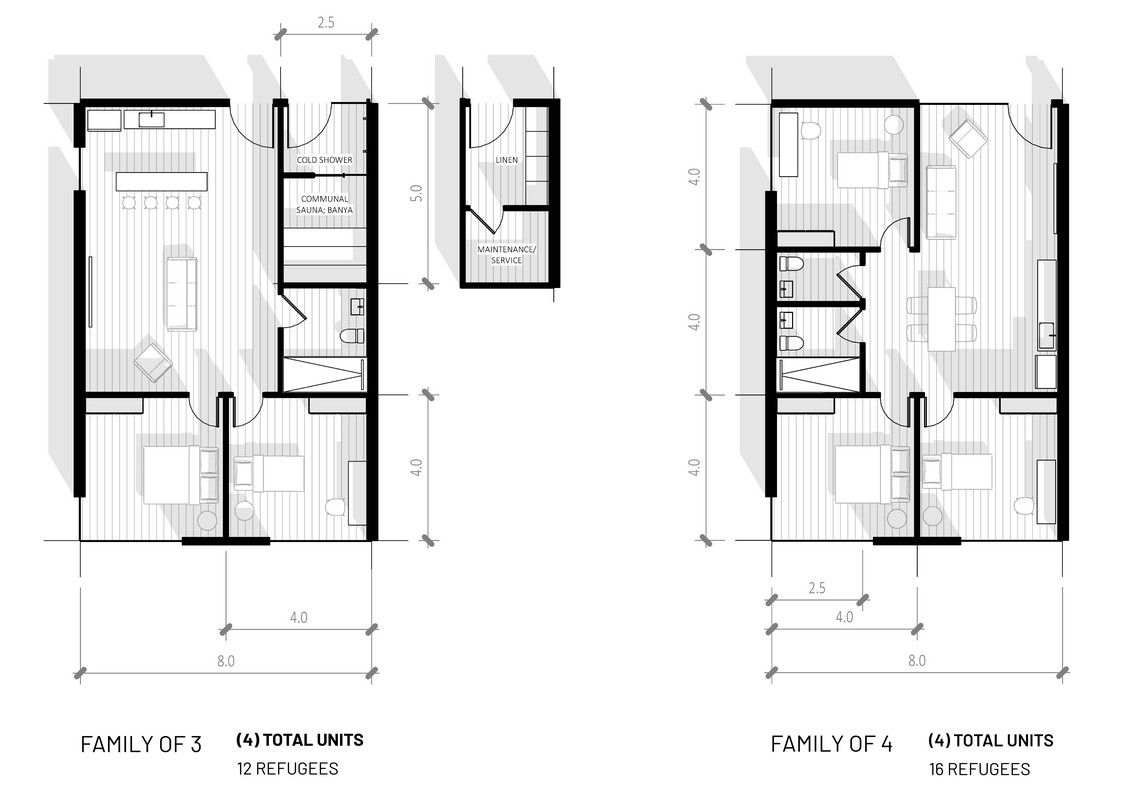
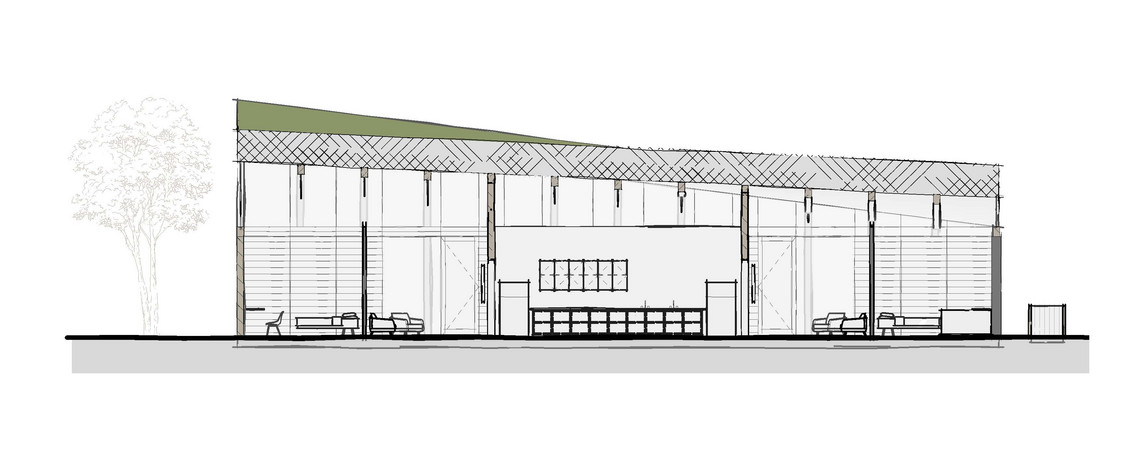
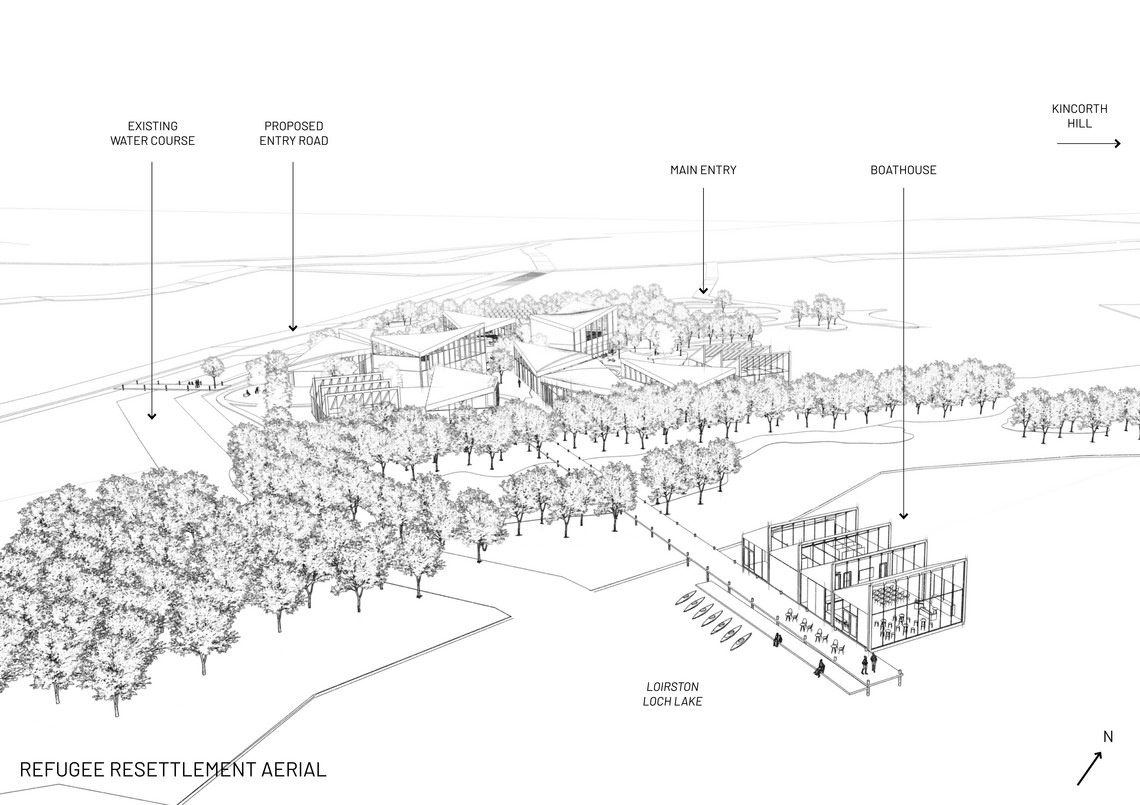
The project proposes a new model of humanitarian architecture that moves beyond crisis response toward restorative, place-sensitive design. It reimagines refugee housing through human-scale, culturally sensitive spaces that support incremental growth, personalization, and integration into local ecologies and communities. Local stone and modern log construction are explored for lasting impact.
Problem
The global displacement crisis has led to unprecedented numbers of refugees seeking new homes and communities. While humanitarian efforts have primarily focused on immediate relief, long-term resettlement requires sustainable, culturally sensitive, and adaptive architectural solutions.
Background
The architectural challenge is to design a resettlement collective that fosters healing, well-being, and social integration for forcibly displaced individuals. This requires an adaptable, cost-effective, and mobile design approach that facilitates social interaction, cultural expression, and equitable access
to education and employment opportunities.
Relevance
By ignoring the lived experience of refuges, architects and policymakers are arguably failing in our duty to provide adequate sanctuary to those in need. The UNHCR (United Nations High Commissioner for Refugees) reported 122.6 million forcibly displaced people worldwide at the end of June 2024.
Objectives
The objective is to gain a deep understanding of resettlement housing design that can help create sustainable, long-term solutions that go beyond emergency responses. To analyze the existing structural processes of settlement, its impact on the lives of refugees, and gain insight into the symbolic meaning of home.