A


Living Heritage
Redefining and interweaving wool as a catalyst for ecological and socio-economic regeneration in Aberdeen, Scotland.
"As living beings, we are in a constant state of change, which is reflected in our shifting infrastructures and needs. Adaptation is therefore not just a needed response but an inherent part of our existence."
The project Living Heritage takes place in Aberdeenshire, northern scotland, where it reimagines Aberdeen city’s train station and its post-industrial district by redefining the cultural and infrastructural landscape of wool production to support urban and rural communities. With most wool in Europe being burned, it proposes the relevance of a redefining of the historical wool mills as a potential for a communal hub of the cityscape - uniting the agents within the production chain to preserve wool as heritage and to ensure its relevance, by adapting its uses for present and future social- and environmental challenges.
Aberdeen contains some of the country’s most polluted areas, that exceeds WHO-recommended levels, mainly due to the running diesel trains on its train station, having a negative effect on the local’s health.
Between diesel fumes and burning fields - the project proposes a dual intervention:
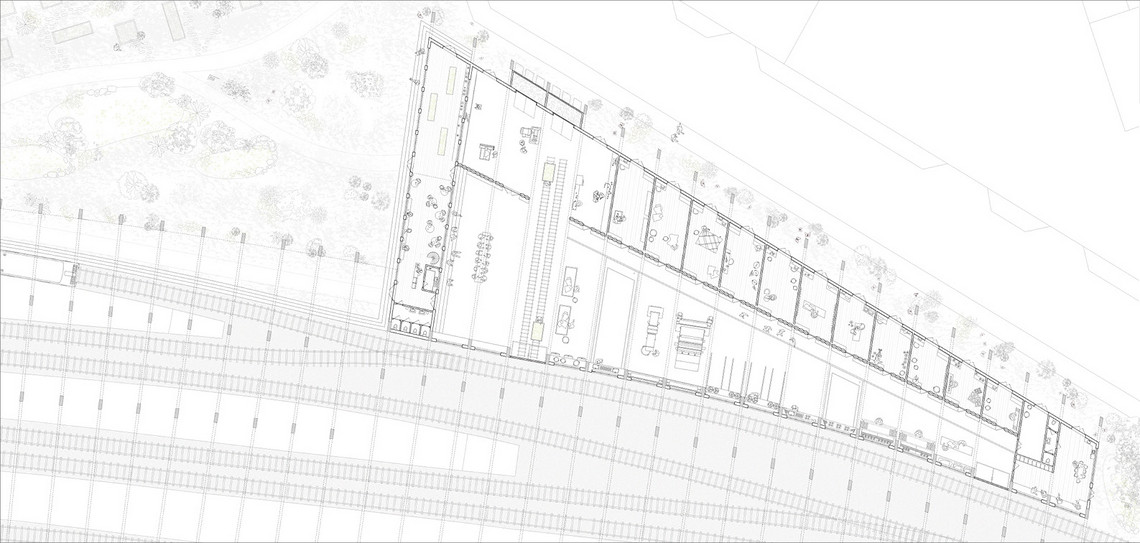
• A wool mill & research lab: Offering rural farmers a place to process their wool, reclaim their autonomy, and explore new uses for wool - scientifically, ecologically, and spatially.
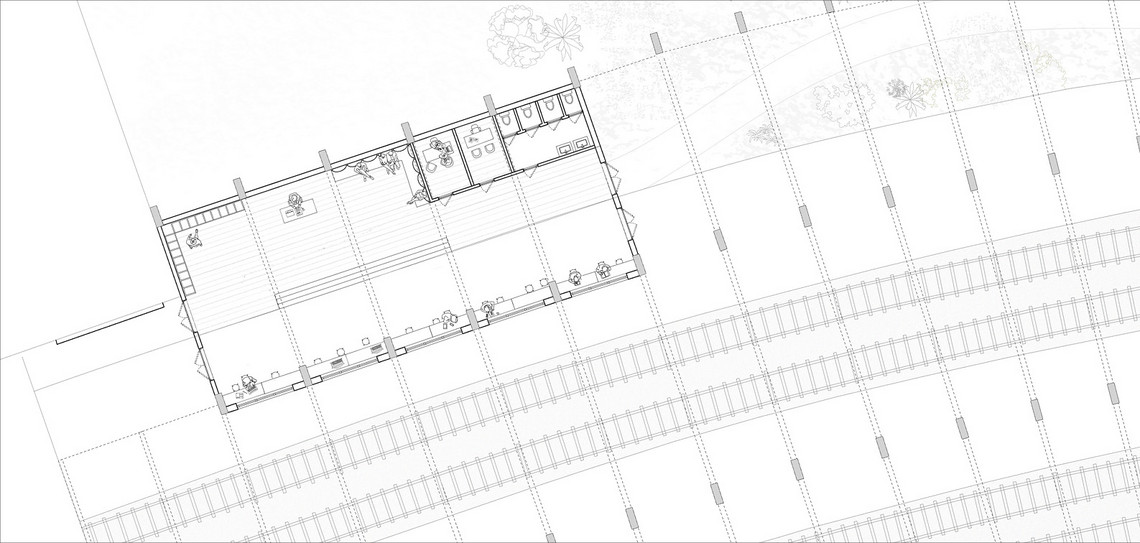
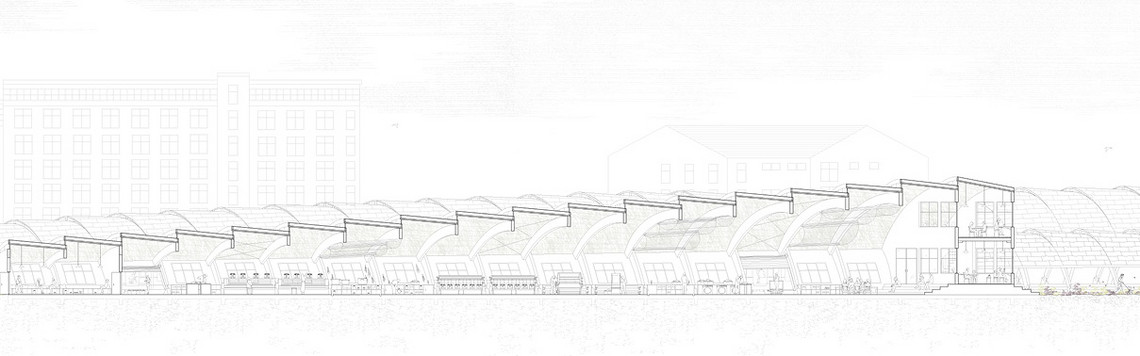
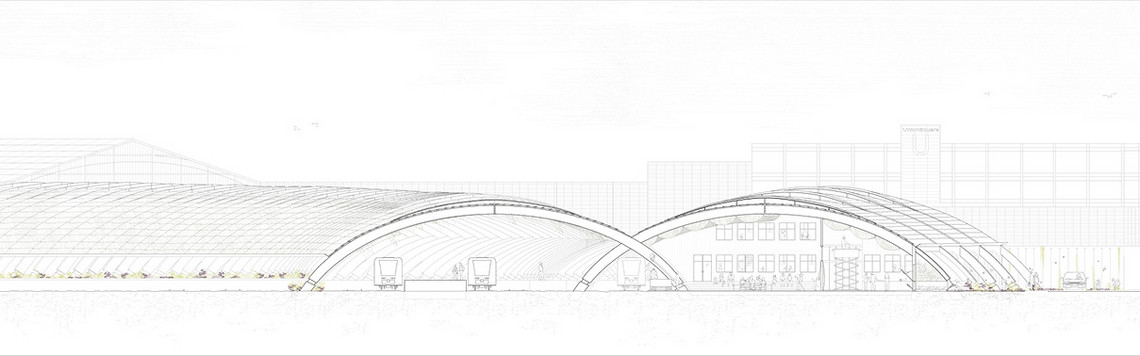
• A redesign of the platform-roofscape: Reimagining the train station’s canopy by using the waste wool as a climate screen: Protecting the users from the harsh weather and filtering the invisible toxins from the air, becoming a silent caretaker of its surroundings. Mitigating both the air pollution in the city and the economic insecurities in the shire.
Living Heritage proposes a new architectural typology - one that regenerates ecosystems, empowers rural economies, and reimagines heritage as a living, co-created future. It asks how we might design with communities, not just for them. It is a gesture of care - toward craft, consumption and each other, and a way to inhabit the future, by listening to what the past still has to give.




The UK is the largest producer of wool in Europe, generating 68.904 tonnes of registered wool annually. However, wool has lost its value, due to the invention of synthetic fibers. Once woven into every layer of society, wool is now being seen as agricultural waste.
Rural sheep farmers are facing issues with wool production. As demand declines and viable alternatives remain scarce, surplus wool is often discarded or burned on open fields, resulting in both environmental and economical insecurity, as well as the loss of a heritage and natural resource.


Air pollution in Aberdeenshire is closely tied to its road-heavy transport infrastructure. In 2023, approximately 1.97 billion vehicle‑miles were driven on Aberdeenshire roads. Nearly 90% of households here own at least one car, with more than half owning multiple vehicles . Transport contributes to over 35% of the area’s total CO₂ emissions and accounts for a large share of Scotland’s nitrogen oxides (NO₂)—a key precursor to both NO₂ and fine particulate matter (PM₂.₅) pollution.
The World Health Organization (WHO) highlights the serious human costs: long-term exposure to PM₂.₅ and NO₂ significantly increases the risk of respiratory and cardiovascular diseases. WHO estimates around 17.000 premature deaths per year across the UK are attributable to outdoor air pollution.


Pollution in Scottish cities - driven largely by traffic emissions - poses a hidden threat not just to human health but also to pollinators like bees, butterflies, and moths. Studies show nitrogen oxides and particulate matter 2.5 - major by-products of vehicle exhaust - react with flower scent molecules. This alters or dissipates scent plumes, making it harder for pollinators to locate flowers.
Pollinators play a vital role in the production of 75% of the world’s food crops, making their survival essential to global food security. Their well-being is closely tied to ours - creating a mutual dependence between pollinators and humans.


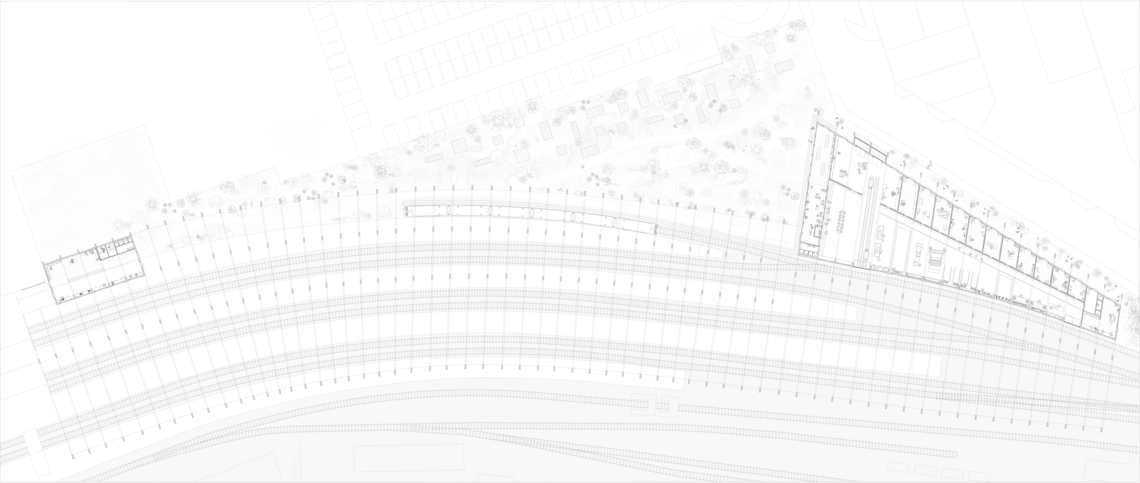
The site is located in the southeast area of Aberdeen’s Train Station, as a forgotten and inactive part of the industrial oil extracting harbor. Positioned between two of the city’s biggest sources of emissions: diesel trains and harbor activity. Aberdeen, once a key hub for trade, this area has been neglected and now sits at the crossroads as the country is transitioning towards net-zero goals. Raising the question: What does a future Aberdeen look like?
This project explores how redefining the wool industry can become a vital agent in regenerating both the social and ecological landscape of the city's identity and economy - by capitalizing on the existing railway infrastructure to reconnect rural and urban communities. By interweaving wool and transportation infrastructure, this project aims to create healthier spaces for the city’s citizens, while also supporting production facilities that serve the wider shire.


This proposal reimagines the traditional wool mill as a cultural meeting point, integrating innovation, sustainability, and community. The mill sources wool directly from the surrounding shire, transported efficiently by its own dedicated train. This system minimizes the need for rural farmers to drive into the city, reducing both travel time and emissions.
Inside the wool mill, dedicated research facilities explore new applications for wool. The project propose the use of waste wool to create casted panels that act as a climate screen over the platform. These panels leverage wool’s natural ability to filter air pollution, offering protection from both toxins and rain.
The mill also provides studio space for local crafters to create and sell their products. As a public destination, the wool mill becomes a tourist attraction—educating visitors on the history, process, and future of wool while showcasing the work of local artisans. Creating a project that supports wool as both a traditional craft and a material for forward-thinking solutions.


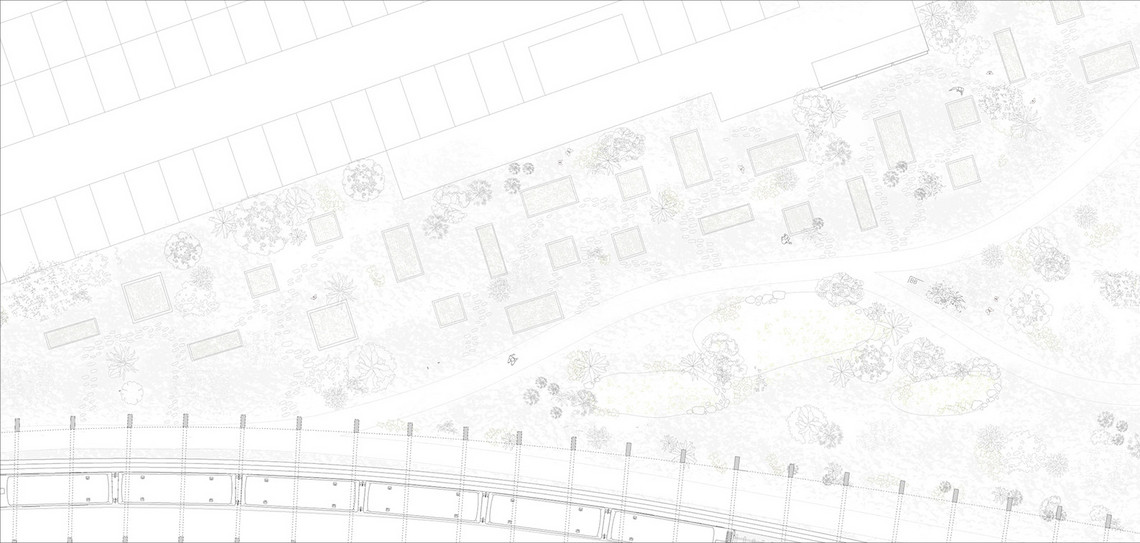
The duality of the building program is brought together in the surrounding urban garden, where nature and industry meet in harmony. This green space acts as a living link—supporting biodiversity, cleaning the air, and creating a regenerative environment for both people and pollinators.
The garden helps restore soil health and supports pollinator species vital for local ecosystems. Plants grown here also play an active role in the natural dyeing process of the wool, forming a closed-loop system. Once the wool reaches the end of its life, it returns to the garden as biodegradable fertilizer—completing the cycle. More than just a functional landscape, the garden becomes a shared, healing space for the community, blending sustainability, circularity, and coexistence.


Pollination Plan