A


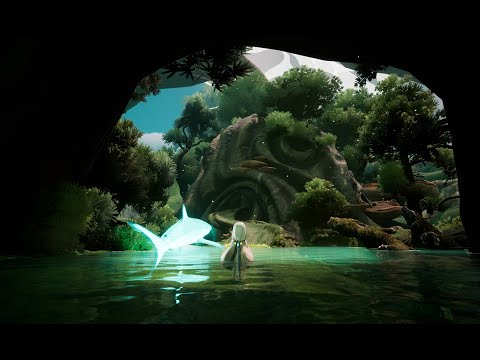
"Homing" explores how diegetic elements can support player navigation as an immersive, UI-independent layer. Developed in Unreal Engine 5, it unfolds across a fantastical land lifted from the sea by a colossal tree. Light and environmental interactions guide the player through the world, unfolding a journey of presence, return, and exploration.
This project began as a design exploration into diegetic navigation—how environmental elements can guide players without relying on traditional UI. I developed the worldbuilding around Arboran, a stylized ecosystem shaped by light, roots, and silent narrative. The process included concept development, visual direction, and creating an art bible to anchor the project’s tone and aesthetics.
From there, I self-learned Unreal Engine 5 and built a five-level prototype. This included the creation of most stylized 3D assets, hand-painted textures, blueprint-based interactivity, lighting design, and material systems. I also modeled and animated the player character, implementing all core mechanics such as totem activation, fish-led navigation, and environmental progression.
This prototype represents a complete solo pipeline—from design research to technical execution. If you're interested in trying it out, I plan to make the Windows build available for download here and on my personal website soon.