


A
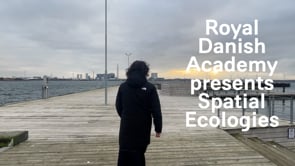
The Royal Danish Academy has made a significant addition to its academic environment in Kalundborg: from February Taneha Kuzniecow Bacchin will join the team as professor. She will lead the new master’s programme Spatial Ecologies, which will welcome its first cohort of students in summer 2026.
Taneha Kuzniecow Bacchin is a trained architect and joins from Urban Design and Critical Theory at TU Delft, where she founded and led major interdisciplinary initiatives, including Transitional Territories, Critical Environments, and Delta Urbanism advancing design research and education on climate adaptation, resource governance, and territorial transformation
“We have gained a professor in the highest international calibre in Taneha. Her field of expertise fits perfectly with what we have always dreamed of creating in Kalundborg. I look forward to seeing her realize both our and her own visions in the new Master’s programme, Spatial Ecologies. With her background, I am convinced that the potentials in Kalundborg and the transformations the city and surrounding landscape are undergoing will create the ideal framework for our architecture education,” says Jakob Brandtberg Knudsen, Dean of Architecture.

Visions for the future of Architecture
The programme will combine fieldwork, design, and material experimentation in an integrated practice where students learn to work across scales and develop solutions with both ethical and creative precision.
“I look forward to shaping a pioneering architectural education and research practice that is truly situated, one that grows from the specific ecologies, industries, and communities while speaking directly to global transitions in climate, resources, and ways of living. The position offers a rare opportunity to teach and research in a landscape where material flows, cultural histories, and environmental change are intensely present.”
Taneha brings with her an impressive portfolio of international research projects, and the programme Spatial Ecologies will be characterized by placing architecture in other contexts such as resource flows, geo-local ground, and lateral and vertical relations.
“My work sits at the intersection of architecture, landscape, and territorial design, informed by political ecology and environmental humanities. Over the past decade, I have coordinated major international research and design initiatives, such as Transitional Territories, Delta Urbanism, Water4Change, Redesigning Deltas, and the UNDP Archipelago Project that explore how environmental fragility and resource transitions can generate new spatial strategies.”
Katrine Lotz, Head of the Institute of Architecture, Urbanism and Landscape, also sees the appointment as a major strengthening of the landscape architecture field:
“I am so pleased and proud that we have succeeded in bringing an international capacity like Taneha into the environment now taking shape in Kalundborg. Taneha’s areas of expertise are very broad, both within the built environment, urban spaces, landscape and large-scale contexts. She represents a substantial bolstering of these areas at The Royal Danish Academy at large”
Kalundborg as a living laboratory
According to Taneha Bacchin, collaboration opportunities in Kalundborg are extraordinary, and her experience will be a key resource in Kalundborg, where the program aims to educate architects capable of working with landscapes in transformation, from buildings to coastal systems and territorial futures.
“Collaboration in Kalundborg holds extraordinary potential. The region’s industrial symbiosis, coastal and agricultural ecologies, and strong science and innovation environments create a unique platform for investigating material cycles, circular economies, and green transition pathways.”


